
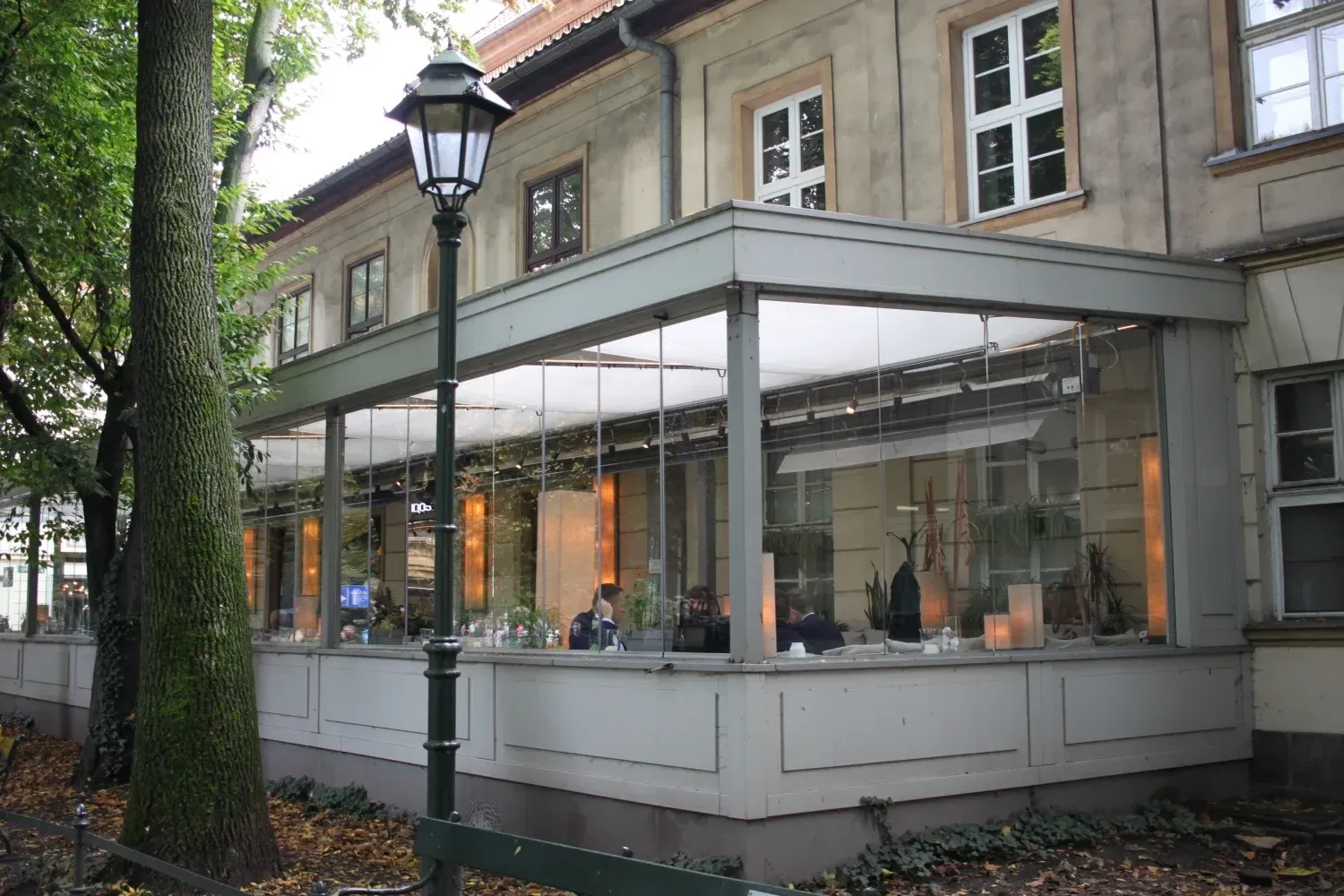
A professional terrace canopy lets a restaurant use its outdoor space regardless of weather — and that translates directly into revenue. Guests increasingly choose venues with comfortable outdoor seating, so well-designed terrace coverage has gone from luxury to a commercial necessity. This guide walks through the canopy categories available, the components that matter, and how to pick the right answer for your venue.
The main canopy categories
The choice of canopy depends on location, architectural style, and how the venue trades. Different categories suit different briefs.
Permanent canopies
Permanent canopies are the year-round option. Built typically from aluminium with glass or polycarbonate infill, they handle every weather condition without seasonal demounting. Modern systems include sliding or folding panels that can be opened in summer, combining the protection of a fixed structure with the flexibility of a pergola. The investment is higher than seasonal alternatives, but for restaurants trading year-round it is recovered through extended seating capacity that works in every season.
Louvre roof canopies (bioclimatic pergolas)
Louvre roofs combine the best of fixed and adjustable systems. Aluminium louvres rotate to control light, ventilation and rain protection. When closed, the louvres form a watertight surface that channels rainwater to integrated side gutters. On warm, still days they can be tilted to optimise airflow while still blocking direct sun. They are particularly popular in modern, minimalist venues where the geometric simplicity of the aluminium structure complements the architecture.
Technical fabric canopies
This category covers retractable awnings, shade sails and full tensile membrane structures. Modern technical fabrics give UV and rain protection while keeping the visual signature of a fabric structure — light, sculptural, and visibly engineered. Premium PVC and PTFE membrane materials now offer service lives measured in decades, dramatically more than the canvas of fifteen years ago. The advantage of a tensile membrane canopy is that the geometry can be entirely custom — making it possible to create unique signature pieces that become part of the venue’s brand identity.
A well-specified canopy can extend the trading season by several months. In Polish climate conditions, where genuinely warm summer days are limited, that ability to use the terrace in cool or lightly damp weather can be the difference that defines the venue’s commercial success.
What makes a good restaurant canopy
Several components matter when picking a canopy for a hospitality venue.
Materials
Aluminium has become the default structural material because of its combination of light weight, strength and corrosion resistance. Profiles can be anodised or powder-coated to any RAL colour, allowing perfect match to the existing architecture. Aluminium does not need the regular corrosion treatment that steel requires, which dramatically lowers lifecycle maintenance costs. Technical fabrics for membrane canopies and awnings need UV stability (so the colour does not fade), waterproofing (without losing breathability), and fire retardance — particularly important in public venues.
Side enclosures
Side panels are what turn a roof into a fully enclosed space. Glass side walls give wind protection without losing visual contact with the surroundings — important for guests who chose to sit outside specifically for the view. Modern sliding/folding systems allow rapid adaptation: fully open on warm days, closed for rain or wind, partially closed for shoulder seasons.
Drainage
Drainage is the unsung hero of any outdoor canopy. Professional systems integrate gutters and downpipes that channel rainwater off the terrace cleanly. Bioclimatic louvre roofs route water down the louvres into side gutters even in heavy rain. Tensile membrane canopies need careful tensioning and slope design to prevent water pooling. Bad drainage means puddles, slip hazards, and accelerated wear on the furniture underneath.
Lighting and heating
Lighting and heating turn the terrace into an evening venue. Integrated LED lighting under the canopy gives both functional illumination and atmosphere — and dimmable, colour-tunable systems let staff adapt the mood through the night. Strategically placed radiant heaters extend usability into cooler weather, comfortably bridging the months when the terrace would otherwise be closed.
How to pick the right canopy for your venue
The decision should start with three questions: where, how, and for whom.
Location and microclimate
Wind, sun and rain exposure all vary with site. A coastal terrace facing the sea handles strong winds and salty air, which demands corrosion-resistant materials and wind-rated structures. A city centre venue surrounded by tall buildings may experience tunnel effects or be shaded for most of the day, which changes the priorities entirely. The right canopy matches the actual conditions of the site.
Architectural style
The canopy should sit naturally in the architecture, not look like an afterthought. A modern, minimalist restaurant suits geometric aluminium and glass. A rustic or Mediterranean venue may work better with natural materials or organic membrane shapes. The best projects start with a clear visual brief and design the canopy as part of the venue identity, not as a generic accessory.
Permits and planning
Before committing, check local building regulations, planning consents and — for heritage buildings — conservator requirements. Historic city centres often have strict rules about colour, form and materials for terrace canopies. Crown property leases may carry their own conditions. Planning approval is rarely a blocker, but it should be confirmed before fabrication starts.
Working with Abastran
At Abastran we specialise in custom designs for hospitality venues. Our process starts with a site visit and a detailed brief, runs through 3D visualisation so the client can see the canopy before fabrication starts, and finishes with installation and commissioning by a team that has seen many similar projects. Years of experience in HoReCa lets us anticipate the issues that come up — drainage at the boundary, lighting placement, heating output — and propose solutions that maximise function and appearance for the budget.
If you are weighing a canopy for your restaurant terrace, get in touch — we will help you choose the right system and make it part of the venue you want to run.