
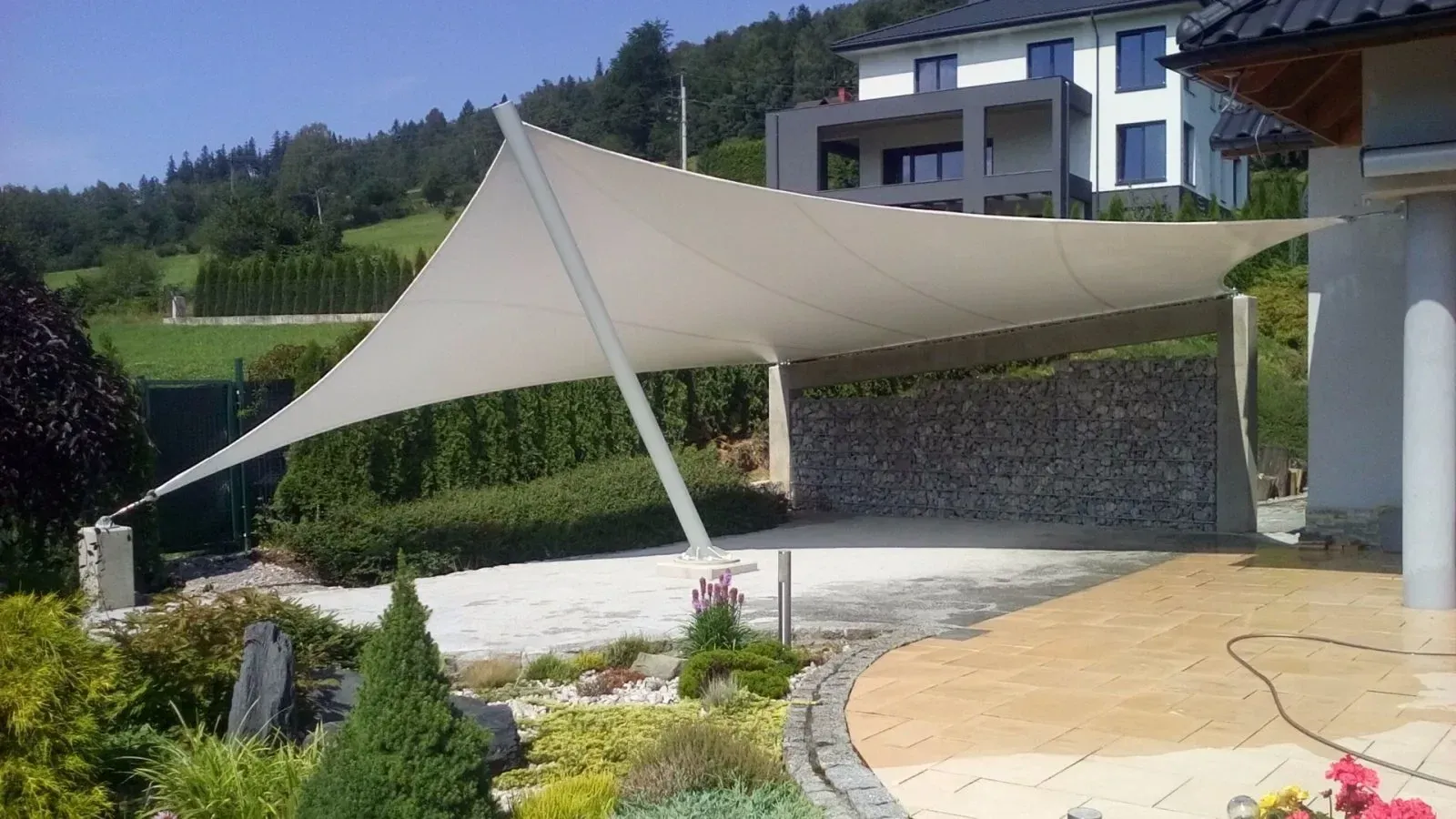
A modern terrace canopy is no longer just shade — it is an extension of the indoor living space, a way to use the garden year-round, and a way to add real value to the property. The market has expanded enormously in the past decade, from temporary event covers through traditional pergolas to architectural-grade PVC membrane structures. Here is how the categories compare and how to pick the right one for your project.
Temporary canopies
Temporary covers are a great answer for short-term needs — a wedding reception, a barbecue, a public event, or a building site that needs weather protection for a few weeks. Modern temporary structures are far more sophisticated than the white wedding tents of fifteen years ago, with aluminium or steel frames, technical fabric covers and engineering rated for real wind loads.
Where temporary canopies fit
The defining feature is the demountability. They go up fast, come down fast, and travel between locations. That makes them perfect for event hire, seasonal restaurants, summer terraces, and any application where the cover only needs to be in place for part of the year.
Trade-offs
The advantages — speed, mobility, low cost — come with a corresponding trade-off in durability and design quality. A temporary canopy is not a 25-year solution. For one-off events or seasonal use it is perfect. For permanent terrace covers there are better answers.
PVC membrane covers
PVC membrane structures sit in a different category. These are engineered roofs built from PVC-coated polyester technical fabric — the same material used on stadium roofs, scaled down to terrace size. The same advantages apply: low weight, long service life, high design freedom, and weather resistance measured in decades.
What makes PVC membranes work for terraces
A premium PVC architectural membrane gives you 20–30 years of UV-stable, weather-tight cover with minimal maintenance. The fabric is light enough that the supporting structure can be a few elegant steel posts rather than a heavy frame, and the geometry can follow any architectural language — modern minimalism, classical curves, or sculptural one-off shapes.
Typical applications
- Year-round terrace covers for restaurants and cafés
- Garden room roofs for residential projects
- Pool covers and conservatories
- Outdoor event spaces and pavilions
- Industrial and commercial canopies
The same workshop technology that builds tent hall covers and shade sails handles every variant. The geometry changes; the underlying fabric and fabrication process do not.
Membrane covers in garden settings
Garden applications are where membrane technology really shines for residential clients. The combination of clean modern lines, daylit interiors and elegant supporting structure suits contemporary garden design particularly well. PVC and PTFE membranes are available in a range of fabric colours, and the cutting pattern can be designed to harmonise with any architectural language.
Aesthetics meets function
A well-designed membrane terrace cover looks like a piece of architecture, not an aftermarket add-on. The translucency of the fabric softens the daylight underneath without making the space feel dark, and the doubly curved geometry catches the eye without overwhelming the surroundings. For homeowners who want a serious garden room without losing visual contact with the rest of the property, it is hard to beat.
How to choose the right cover for your project
The decision usually comes down to four questions:
Durability and finish
How long do you want it to last? A temporary canopy is sized for years of intermittent use; a PVC membrane structure is sized for decades of continuous service. The right answer depends on your goals.
Aesthetics
Does the cover need to read as a design feature, or is it strictly functional? Architectural membranes can be tuned to either — but if visual identity matters, the geometry, fabric grade and edge details all need attention from a designer.
Installation complexity
Temporary covers go up in hours. Architectural membranes need a foundation, a steel substructure, prefabrication and a skilled installation crew. The total project timeline ranges from a single afternoon to several weeks depending on what you choose.
Budget vs lifetime cost
Cheaper covers are cheaper to buy but more expensive over time per year of service. Premium membranes are more expensive upfront but lower in lifetime cost. The right choice depends on whether you are optimising for capital outlay or for lifecycle economics.
The future of terrace covers
The trend lines are clear. Smart canopies that adjust automatically to weather conditions, integrated PV layers in the fabric, sustainable manufacturing and recyclable materials — every one of those is in active development across the industry. Architectural membranes are particularly well placed to absorb these innovations because the underlying fabrication process is already digital, modular and engineering-driven.
Summary
For permanent residential and commercial terraces, modern tensile membrane covers are increasingly the right answer. They combine durability, design freedom and functionality in a way that no traditional pergola or canopy can match — and they reach price points that put them within reach of any serious renovation project.
If you are weighing a terrace cover for your project, contact Abastran — we will help you specify the right system for the space, the budget and the look you want.