
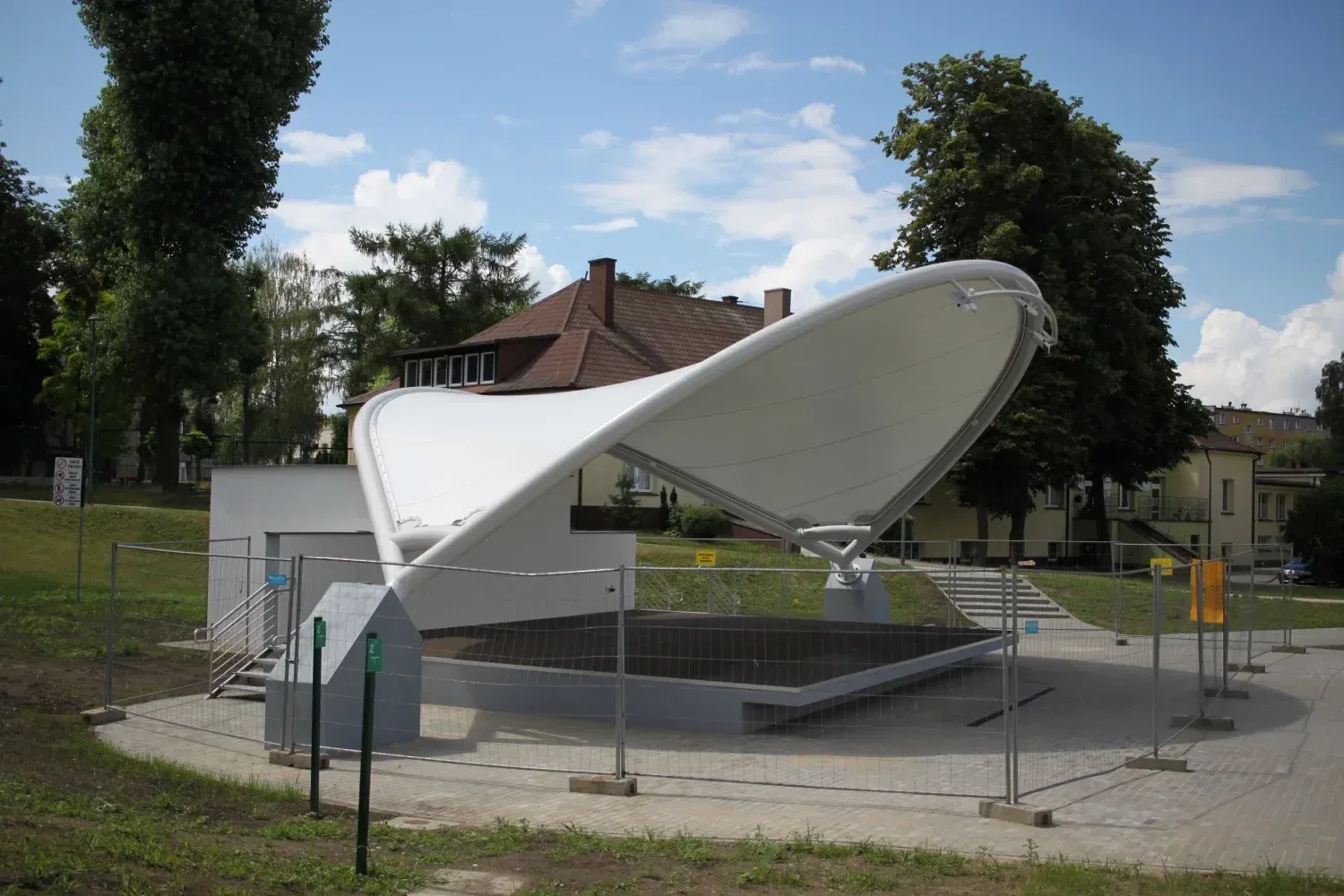
PVC-coated polyester membranes are some of the longest-serving fabric materials in modern architecture. A well-specified, well-installed membrane envelope can stay in service for 25 to 30 years, sometimes longer, with only routine maintenance. Achieving that result is not luck — it depends on five factors that every project owner should understand before signing off the design.
What a PVC architectural membrane is, briefly
A PVC architectural membrane is a high-tenacity polyester base fabric coated on both sides with polyvinyl chloride. Premium grades add a PVDF (polyvinylidene fluoride) lacquer on top to slow weathering and keep the surface clean. Inside the PVC layer are stabilisers, plasticisers and UV inhibitors that determine how the membrane behaves over time.
This combination is what gives the material its three defining properties: tensile strength from the polyester base, weather protection from the PVC coating, and longevity from the topcoat.
The five factors that decide durability
1. Raw material quality
Not all PVC membranes are created equal. The differences between a low-cost roll and a premium product show up in the stabiliser package, the plasticiser content, the base fabric weight, and the coating thickness. Premium fabrics from manufacturers like Serge Ferrari (Précontraint) or Mehler (VALMEX) start at a higher base level than generic alternatives — and they hold that level for far longer.
The takeaway: specify a named manufacturer and a documented grade. Saving 15% on the fabric cost can cost you a third of the service life.
2. Thickness and weight
Membrane thickness — usually expressed in g/m² of total fabric weight — drives mechanical resistance to abrasion, impact and tearing. Typical grades for architectural use:
- 800–900 g/m² — light-duty applications, terraces, shade sails
- 1100 g/m² — most tent halls, general-purpose canopies
- 1300–1500 g/m² — large architectural roofs, sports halls
- 1500+ g/m² — heavy industrial covers, demanding wind/snow loads
The right grade is always the one your structural engineer specifies. A heavier fabric is not automatically better — it can be overkill for the load case and add cost without value. But going lighter than the engineer’s recommendation is a fast route to premature failure.
3. Fabrication quality
A premium fabric joined with bad seams gives you a bad envelope. Two things matter at the welding line:
- HF welding — high-frequency welding gives seams as strong as the parent fabric. Other methods (hot air, hot wedge, glue) work in some applications but are not the default for architectural envelopes.
- CNC cutting — panels cut by CNC plotter to a digital pattern fit together correctly under prestress. Hand-cut panels accumulate small geometric errors that show up as wrinkles or stress concentrations on site.
Both are standard practice at any serious membrane fabrication workshop — the question is whether the fabricator runs them in-house or outsources them.
4. Installation quality
A perfect membrane installed badly will fail early. The installation team needs to:
- Tension the envelope evenly to the design prestress
- Avoid local stress concentrations at corners and edge plates
- Protect the fabric from sharp tools and contact with other materials
- Detail the connections so water cannot pond against any seam
- Hand the building over with documentation of the as-installed prestress
That last point is often overlooked. Without a record of the as-installed prestress, future re-tensioning becomes guesswork.
5. Maintenance
The cheapest thing you can do to extend the life of a membrane envelope is wash it. PVC surfaces accumulate atmospheric soiling that traps moisture against the topcoat and accelerates ageing. An annual or biennial cleaning, plus a visual inspection of seams and edges, costs almost nothing and pays back in years of additional service life.
Beyond cleaning, the maintenance plan should include checking the prestress (re-tensioning if needed), inspecting fixings and edge plates, and repairing any local damage before it grows.
Where PVC membranes are used in service
The same fabric that goes into tensile membrane roofs covers tent halls, terrace canopies, shade sails, inflatable structures and industrial covers. What changes between applications is the grade, the cutting pattern and the supporting structure — the underlying material is the same workhorse it has been for decades.
In summary
Three decades of service from a PVC architectural membrane is realistic — and it depends on getting all five factors right. Specify a named premium grade. Get the engineer to confirm the weight. Use a fabricator who HF-welds in-house and cuts on a CNC plotter. Install the envelope to design prestress. Wash it and inspect it once a year.
If you want a sober conversation about which membrane is right for your project — and what it will realistically cost in service over 25 years — get in touch with Abastran.