
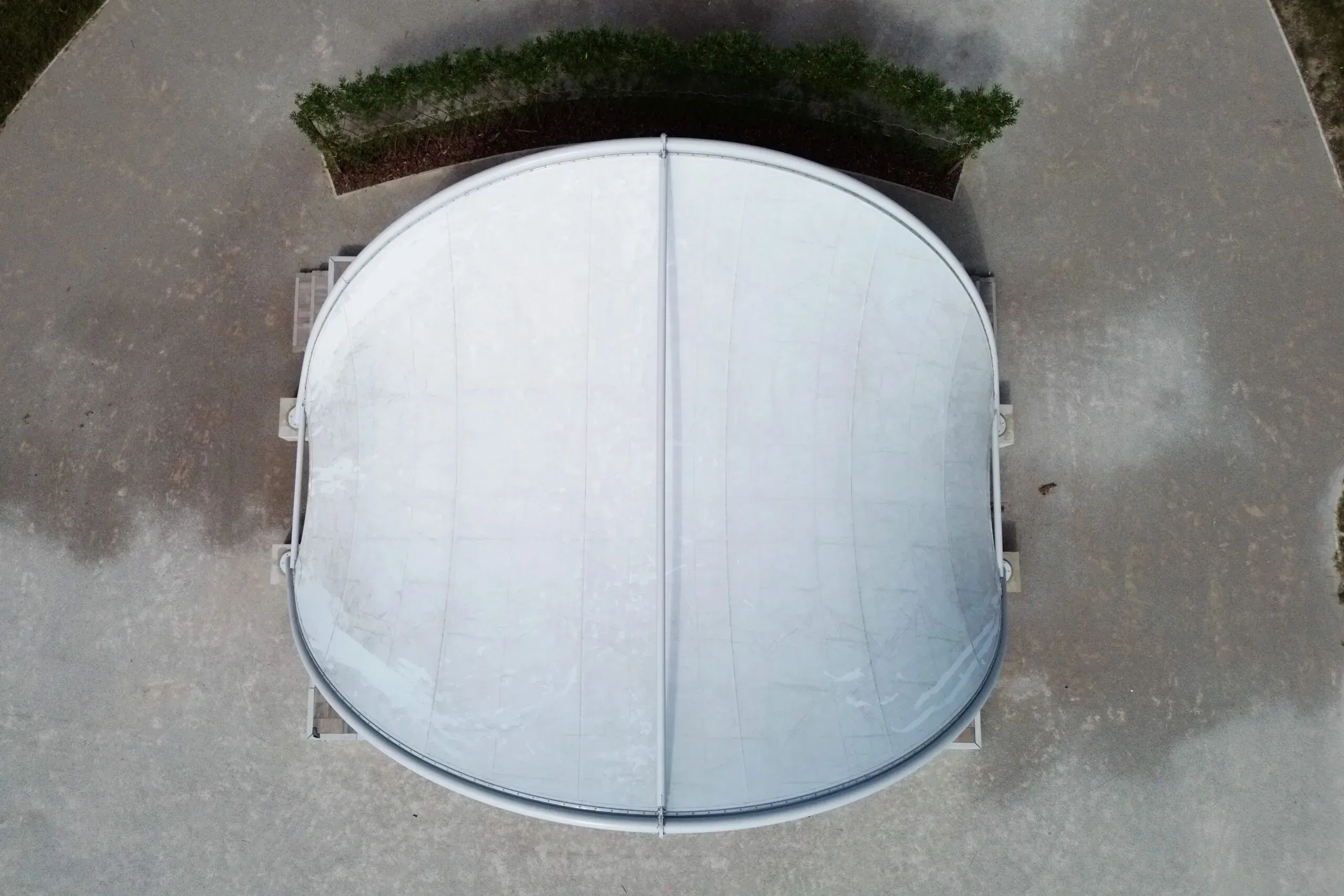
A PVC membrane is a thin, flexible technical fabric built around a polyester base coated with polyvinyl chloride. It is one of the workhorse materials of tensile membrane architecture, tent hall covers and modern waterproofing systems. Architects, engineers and main contractors choose it for the same reason: it is strong, weather-tight, and it stays that way for decades.
What is PVC-coated polyester, technically?
The base of every PVC architectural membrane is a high-tenacity polyester yarn woven into a base fabric. That base is then coated on both sides with PVC, which protects the yarn from UV radiation, moisture, abrasion and chemical attack. A protective topcoat — usually PVDF — is added on top to keep the surface clean and slow down ageing.
The result is a material that is light, flexible and highly tear-resistant. PVC membranes are produced in different weights and thicknesses to match the load requirements of the project — from roughly 800 g/m² for shade structures up to 1500 g/m² and beyond for large-span roofs and industrial halls.
Where PVC membranes are used
PVC-coated polyester is the default material for the majority of architectural membrane projects. Typical applications include:
- Tensile membrane roofs for stadiums, amphitheatres, terraces and entrance canopies
- Tent hall covers for industrial, sports and event facilities
- Shade sails for restaurants, schools and public spaces
- Inflatable structures including air-supported sports halls
- Façade cladding as a lightweight alternative to glass or panel systems
- Waterproofing for flat roofs, terraces and water tanks
The same fabric that covers a 5 000 m² stadium roof can be cut down and welded into a small terrace canopy. The flexibility comes from the production process — every membrane envelope is fabricated to its own cutting pattern.
Why architects and engineers choose PVC
Weather resistance
A well-specified PVC membrane shrugs off rain, snow, hail, UV radiation and wide temperature swings. The PVDF topcoat keeps the surface free of dirt streaks, and the base PVC layer protects the polyester yarn from photo-oxidation. Service life is typically 20–30 years for premium products with full PVDF lacquer.
Mechanical strength
PVC-coated polyester resists tearing, abrasion and impact much better than its weight suggests. That makes it suitable for environments where mechanical stress is high — fly-off debris in storms, snow loads on stadium roofs, or accidental contact during installation.
Easy to fabricate
The defining feature of PVC membranes for the architectural market is that they are easy to weld. Two pieces can be joined into a single watertight panel using high-frequency PVC welding, with seam strength matching the strength of the parent fabric. That is what makes free-form, curved membrane geometry possible at all.
Cost-effectiveness
Compared to PTFE-coated fibreglass or ETFE foil, PVC-coated polyester is significantly cheaper while still delivering 20+ years of service. For most commercial projects it offers the best balance between performance and cost.
Thickness and grade — how to choose
Choosing the right PVC membrane is mostly a question of load and span. As a rule of thumb:
- 800–900 g/m² — small shade sails, decorative canopies
- 1100 g/m² — terrace roofs, mid-size canopies, inflatable halls
- 1300–1500 g/m² — large architectural roofs, sports facilities, stadium canopies
- 1500+ g/m² — heavy industrial halls, demanding wind/snow load conditions
The right grade is always defined by structural calculations — a project should never be sized off a brochure value alone.
In summary
PVC-coated polyester is the industry-standard architectural membrane for a reason. It is strong, weather-resistant, easy to fabricate and cost-effective. For most tensile membrane and tent hall projects it is still the first choice — and the manufacturing process around it (CNC cutting, high-frequency welding, on-site tensioning) is well understood and highly reliable.
If you are planning a project where a PVC membrane could be the right answer, get in touch — we will help you specify the right material and the right manufacturing approach for the job.