
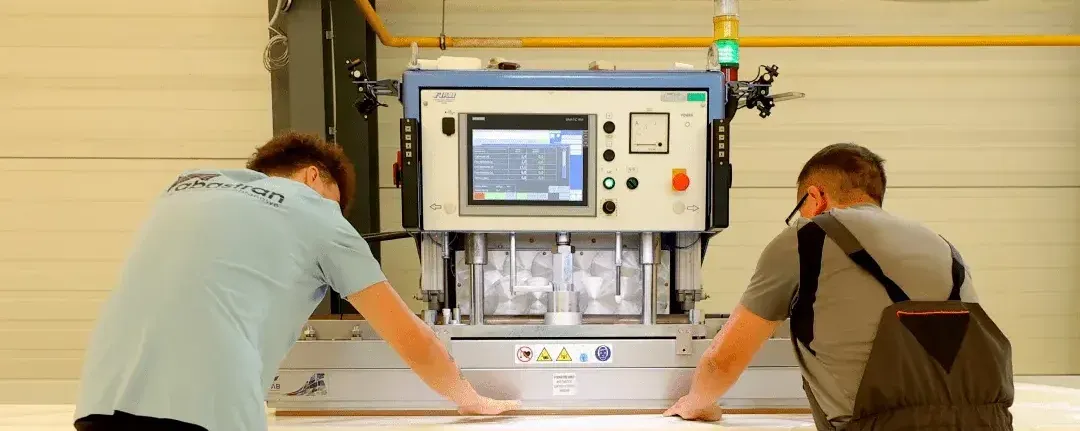
Modern large-scale projects place increasingly demanding requirements on industrial fabrication: precision, durability, efficiency. In that context, HF (high-frequency) welding technology has become an indispensable tool. Its unique characteristics let it serve many sectors with benefits that are hard to overstate. This article walks through what HF welding is, what it delivers, and where it is most commonly used.
What is HF technology?
HF technology — high-frequency welding — uses electromagnetic waves with frequencies between 13 and 27 MHz to weld and bond materials. The process generates heat by exciting molecules inside the material, creating a strong, durable bond without any added adhesives. It is particularly effective with thermoplastic materials like PVC, PU, and coated technical fabrics.
Key features of HF technology
- High precision — enables accurate joining even of complex shapes
- Durability — bonds are resistant to mechanical, chemical and weather stresses
- Speed — the welding process happens in seconds, dramatically improving production efficiency
- Sustainability — no glues or solvents required
Why HF technology works for large-scale projects
1. Joint strength and reliability
HF welding produces exceptionally strong, durable bonds capable of handling demanding operating conditions. That makes it ideal for projects where resistance to tension, compression and environmental stress is critical.
2. Efficiency on big projects
Large-scale structures — industrial tents, swimming pools, membrane roof envelopes — need a technology that can join large surface areas quickly and precisely. HF welding lets these projects move through fabrication on tight schedules, minimising costs and maximising throughput.
3. Versatility
HF welding is remarkably versatile — it serves construction, logistics and medical industries equally well, joining a wide range of materials. That flexibility makes it indispensable for large-scale fabrication.
4. Sustainability
By eliminating adhesives and solvents, HF welding is more environmentally friendly than traditional joining methods. Lower production waste also reduces the environmental footprint.
HF welding applications
Construction and industry
HF welding is widely used in the production of PVC architectural membranes, rain covers and industrial curtains. Its durability and watertightness make it ideal for demanding construction applications.
Logistics and warehousing
In logistics, HF welding produces transport tarpaulins, warehouse tents and protective covers. The fast joining process enables the creation of large, durable structures that can be deployed quickly.
Medical and healthcare
In medical applications, HF welding produces medical mattresses, orthopedic cushions and fluid bags. The reliable, hygienic joints are critical in this sector.
Why invest in HF technology?
- Time and cost savings — fast joining process optimises production
- Versatility — HF technology works across many industries and material types
- Sustainability — no chemical additives, less waste
- High quality — durable, attractive joints that meet the highest standards
In summary
HF technology brings new standards to large-scale fabrication projects. Its versatility, durability and efficiency make it indispensable across many sectors including construction, logistics and medicine. Investing in HF welding gives you not only quality but also sustainability and savings. If you are looking for modern joining methods, HF technology is a choice that pays off.
If you would like to learn more about HF technology and how it can help your project, get in touch with Abastran — we will help you choose the right approach.