
Building a tent hall has become an attractive alternative for businesses across many sectors. Tent halls are valued for fast project delivery, design flexibility and predictable costs. This article walks through the build process in detail — what each phase actually involves, how long it takes, and why prefabrication delivers the speed that conventional construction cannot match.
Building a tent hall step by step
The process splits into three main phases. Each one demands precision, the right preparation and real experience. Here is what each phase actually delivers.
Engineering and design
The first and most important step is preparing a detailed project design. At Abastran the engineering team starts with a thorough analysis of the client’s brief: what the building will be used for, its dimensions, and the load conditions it has to handle. Material selection follows — typically high-strength steel framing and PVC-coated polyester membrane covers, chosen for durability and weather resistance.
Personalisation matters at the design stage. Clients can choose colours, roof type and cover specification, allowing the hall to fit the company’s identity and operational needs. Optimisation of the structure is a particular focus: modern engineering tools let us produce designs that are light, strong and economical to operate. Every project meets the relevant safety and load standards.
Component fabrication
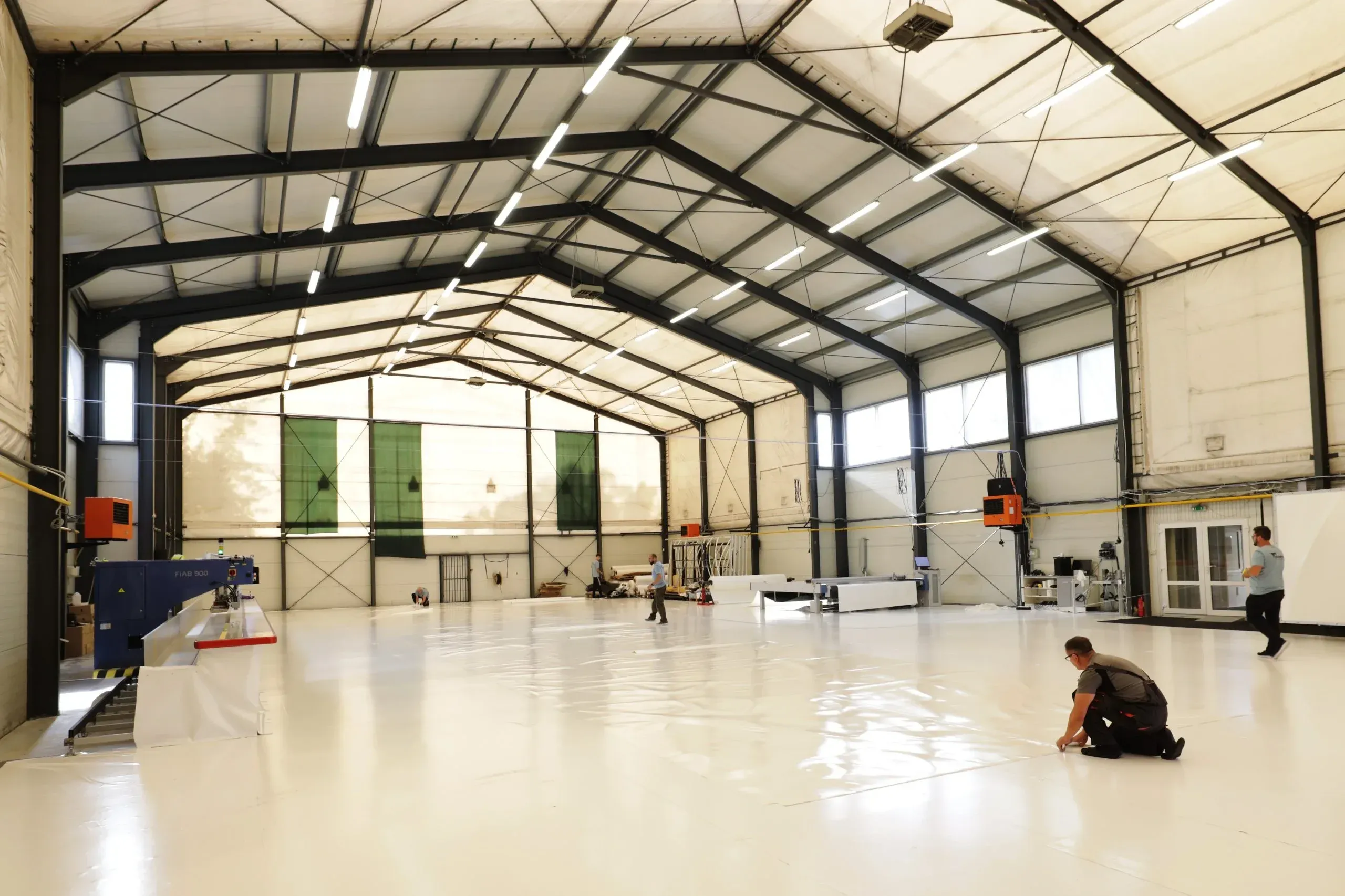
After the design is signed off, fabrication of the components begins. Steel elements are CNC-cut for precise fit during assembly. The PVC cover is HF-welded using modern equipment that delivers durable, watertight seams.
Every step of the production process runs under strict quality control. Documentation and certification confirm that the finished components meet the relevant industry standards. The combination of modern fabrication technology and careful quality control gives tent halls long service life and reliable performance under variable weather.
On-site assembly
The final phase is assembly on the client’s site. The process starts with site preparation — levelling and compacting the ground to ensure stable foundations. The skilled assembly team then erects the steel framework, the spine of the hall. The frame is built from precision-cut elements that fit together cleanly and quickly.
After the frame is up, the cover and accessories — doors, gates, ventilation systems — are installed. The Abastran assembly team has years of experience with tent hall installation, which keeps the work on schedule. Each phase of installation is carefully checked to ensure quality and safety. The result is a tent hall ready for operation in a fraction of the time conventional construction would need.
How long does building a tent hall actually take?
The total project time is one of the key advantages of tent halls compared to traditional buildings. Below we look at what to expect and what factors influence the timeline.
From design sign-off to handover
The average timeline from design approval to completed installation is 3 to 6 weeks. This is indicative — every project is treated individually and the schedule is adapted to the client’s specific needs.
The key reason for the speed is prefabrication. Most components are produced in advance under controlled factory conditions, so on-site work is mostly assembly with minimal delay. The result: clients can start using their hall within a few weeks of committing to the investment.
What affects the timeline
Several factors influence the build time. The most important is the size of the hall — larger structures need more production and assembly time. Material choice also matters: specialist membranes can extend production slightly but deliver better operational performance.
Custom requirements like non-standard dimensions, specialised ventilation systems or additional accessories can affect the timeline. Even so, the flexibility and experience of an established fabricator can deliver even complex projects in tight timeframes. Prefabricated elements are prepared in advance and arrive on site ready for installation, which keeps the project moving.
Why work with Abastran?
Picking the right partner for a tent hall build is critical to project success. Abastran stands out through years of experience, deep specialist knowledge, and a comprehensive approach to every project. Here is why Abastran is the right partner.
Tent hall specialisation
Abastran specialises in tent hall design and construction. That focus translates into deep knowledge of the discipline and the latest trends in the industry. Our offering covers high-quality PVC covers known for durability and weather resistance.
We also design and build tensile membrane structures, steel structures and ETFE structures. Each category has its own strengths and can be tailored to the specific brief. Modern fabrication technology and premium materials give Abastran tent halls the combination of function, aesthetics and durability that the market demands.
End-to-end delivery
Abastran’s main advantage is end-to-end project delivery — from initial concept through detailed design and fabrication to professional installation on site. The client does not have to coordinate between multiple subcontractors, which saves time and reduces project risk.
Modern production technology and efficient project management deliver tent halls in much less time than conventional construction. Professional approach, on-time delivery and attention to detail make Abastran a trusted partner for even the most demanding projects.
Permits — does a tent hall need a building permit?
Regulatory questions are part of every construction investment. For tent halls, the requirements depend on how long the structure will be in service.
Tent hall and building permit
Polish building law distinguishes two main categories of tent halls: temporary and permanent. Temporary halls used for less than 180 days require only a notification to the building authority, which is much simpler than a full building permit.
Halls used for longer than 180 days are treated as permanent buildings and require a full building permit. The process involves complete project documentation that has to comply with the local plan or a planning decision. This is more complex and time-consuming, but with support from Abastran’s specialists the process moves smoothly.
If you are weighing a tent hall for your business, contact Abastran — we will help you scope the project, navigate the permits and deliver the hall on the timeline you need.