
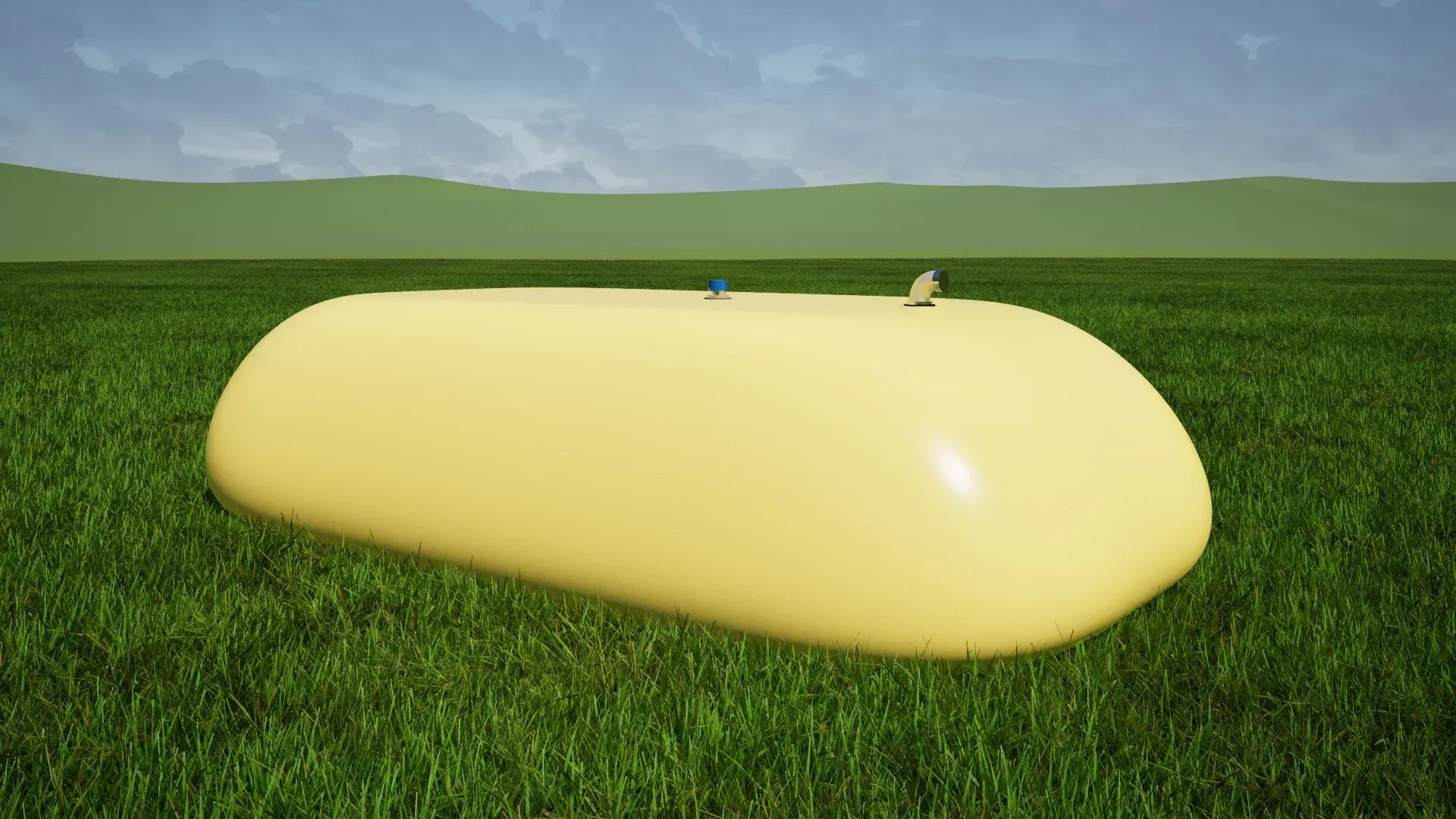
Flexible tanks are a modern solution for storing water and liquids in agriculture. Faced with growing challenges around water management and storage of liquids — for irrigation, fertilisation and livestock — flexible tanks have become a popular and effective answer. They offer versatile, reliable storage options for various liquids, providing essential support for modern agriculture.
What are flexible tanks?
Flexible tanks — also called pillow tanks — are collapsible containers made from durable, flexible materials like PVC or polyurethane. They are designed to safely store large quantities of liquids including water, liquid fertilisers and slurry. Unlike traditional tanks, flexible tanks can be easily transported, installed and relocated, making them ideal for agricultural environments where space and mobility are key.
Several types of flexible tanks suit different agricultural applications, including water tanks, slurry tanks and rainwater collection tanks. They can be used for both temporary and permanent storage depending on the specific needs of the farm.
Applications of flexible tanks in agriculture
Flexible tanks can serve various functions on a farm, making them a valuable tool for effective liquid storage.
Storage of liquid fertilisers and slurry
Farmers use flexible tanks to store liquid fertilisers because of their ability to safely store large quantities. These tanks prevent contamination and leakage, ensuring that fertilisers are applied effectively and with minimal environmental impact. Slurry tanks help manage animal waste, providing a safe sealed solution for storing it until it is processed or applied to fields.
Water storage for irrigation
Water is a critical agricultural resource, and flexible tanks offer an effective storage solution. These irrigation tanks can store water collected from rain or other sources, which can then be used for crop irrigation during dry periods. Rainwater tanks are particularly useful in regions with limited water resources, allowing farmers to collect and store water for later use.
Drinking water for livestock
Beyond crop irrigation, flexible tanks are often used to store drinking water for livestock. These tanks provide a portable, flexible solution that ensures animals always have access to fresh water, especially in remote parts of the farm where traditional water sources may not be available.
Benefits of flexible tanks in agriculture
Minimised environmental impact
Flexible tanks reduce the risk of leaks and spills, helping to prevent contamination of soil and water. This is particularly important when storing potentially harmful substances like liquid fertilisers or slurry. The tanks provide a safe, sealed environment in which liquids are stored securely.
Portability and flexibility
One of the standout features is portability. The tanks can be easily moved and relocated to various places on the farm as needs change. Whether for temporary storage or during field rotation, their flexible nature makes them versatile and easily adaptable to changing agricultural needs.
Low maintenance
Flexible tanks require minimal maintenance compared to rigid alternatives. Made from durable materials like PVC and polyurethane, they resist harsh weather, do not corrode and do not crack. This reduces the need for ongoing repairs or maintenance.
Cost savings
Although the initial investment in flexible tanks can be higher than some traditional storage solutions, they offer long-term savings. Their durability means less need for replacement or repair, and the option of easy relocation reduces the need to own multiple tanks across the farm.
Flexible tanks can serve various agricultural needs from water storage to liquid fertiliser storage. They are a practical, eco-friendly and effective solution for farmers looking to optimise liquid storage on their farms.
In summary
Flexible tanks in agriculture are a versatile, cost-effective solution for storing water, liquid fertilisers and slurry. Their flexibility, ease of use and environmental benefits make them an ideal choice for modern agricultural operations. With flexible tanks, farmers can better manage water resources, safely store liquid fertilisers and provide livestock with access to clean water while minimising environmental impact.
If you are considering modernising water or liquid storage systems on your farm, contact Abastran — we will help you specify the right flexible tank for your needs.