
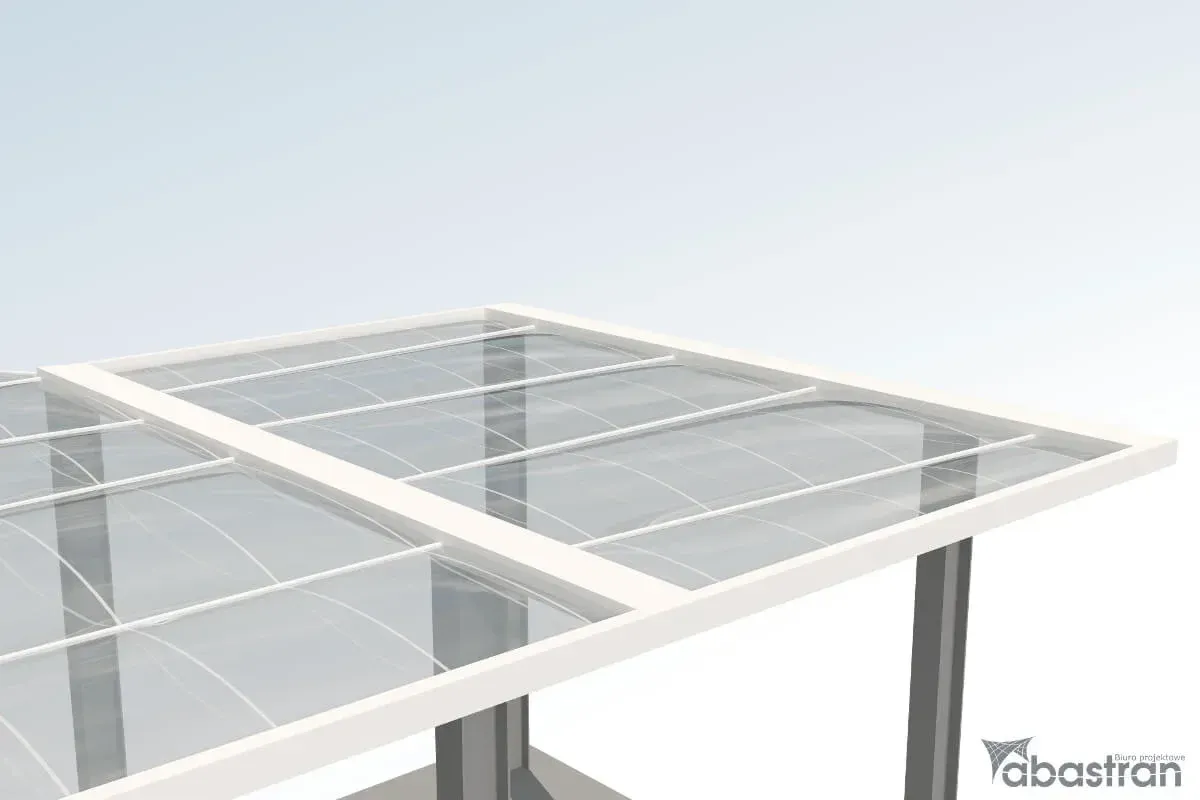
ETFE — short for ethylene tetrafluoroethylene — is a fluoropolymer foil that has become one of the most distinctive materials in contemporary architecture. It is light, transparent, exceptionally durable, and it lets architects create roofs and façades that simply cannot be built any other way. Buildings as recognisable as the Allianz Arena in Munich or the Eden Project in Cornwall use ETFE precisely because nothing else delivers the same combination of properties.
What ETFE actually is
ETFE is a synthetic fluoropolymer first developed in the 1970s for the aerospace industry. In architecture it is used in the form of thin foil, typically between 50 and 300 microns thick. The foil is rarely used as a single layer — instead, two or three layers are welded around the edges into a pneumatic ETFE cushion that is then inflated with low-pressure air. The cushions are stitched into a cable or aluminium frame that holds the entire roof or façade in place.
What makes ETFE special
Light transmittance
A single layer of ETFE transmits up to 95% of natural light. Even multi-layer cushions still let through 70–80% of daylight, depending on the foil thickness and any printed pattern (frit) on the surface. That makes ETFE ideal for atria, swimming pools, conservatories and any space where natural light is critical to the brief.
Weight
ETFE is roughly 1% the weight of glass. A 1 m² triple-layer cushion weighs around 1 kg — compared to 25–30 kg for the equivalent insulated glass unit. The supporting structure can be far lighter, costs go down, and architects gain freedom to span large distances with minimal mass.
Strength and elasticity
For something so light, ETFE is remarkably tough. It can be stretched to roughly three times its original length before failure, and it recovers elastically from large deformations. That means hailstones, falling debris and wind load are all handled gracefully.
UV and chemical resistance
ETFE is essentially inert. It does not yellow under UV radiation, it shrugs off industrial pollution, and it withstands a wide range of chemicals. After 30+ years of service it still looks the same as the day it was installed.
Thermal performance
A single layer of ETFE is a poor insulator on its own. The trick is the cushion: trapped air between two or three foil layers gives meaningful thermal insulation comparable to insulated glazing. Multi-layer ETFE cushions hit U-values of around 1.95 W/m²K (double-layer) and 1.5 W/m²K or better (triple-layer with printed pattern).
Self-cleaning surface
ETFE is non-stick. Rain washes most contamination off the surface, which means maintenance is minimal — a major operational advantage on stadium roofs and other large-area applications where access is difficult.
Where ETFE is used
Stadium and sports facility roofs
The Allianz Arena was the first major project to put ETFE on the architectural map and it remains a textbook example. The lightweight, semi-transparent envelope allowed Herzog & de Meuron to create a roof that glows from within — and the cushions weighed a fraction of any glass alternative. Modern stadium projects worldwide now use ETFE as a default option for translucent roofs.
Atria, conservatories and transit halls
For any space where you need a long-span translucent roof with minimal supporting structure, ETFE is the natural answer. Botanical gardens, train stations and shopping centres all use ETFE for the same reason: light flooding the interior, very little visible structure, and a building envelope that lasts decades.
Façades
ETFE works as a façade as well as a roof. Compared to glass it cuts the load on the structure significantly and offers far more freedom in shape — and the foil can be printed with a frit pattern that controls solar gain, privacy or aesthetics independently of the supporting structure.
ETFE in summary
ETFE is one of the most flexible, longest-lasting and most architectural materials available today. It transmits light, weighs almost nothing, lasts decades, cleans itself and gives architects design freedom that glass simply cannot match. It is more expensive per square metre than PVC-coated polyester, but for the right project — where light, weight and span really matter — there is nothing else like it.
If you are designing a project that could benefit from ETFE, get in touch with Abastran — we will help you assess whether ETFE is the right answer and, if so, how to specify it properly.