
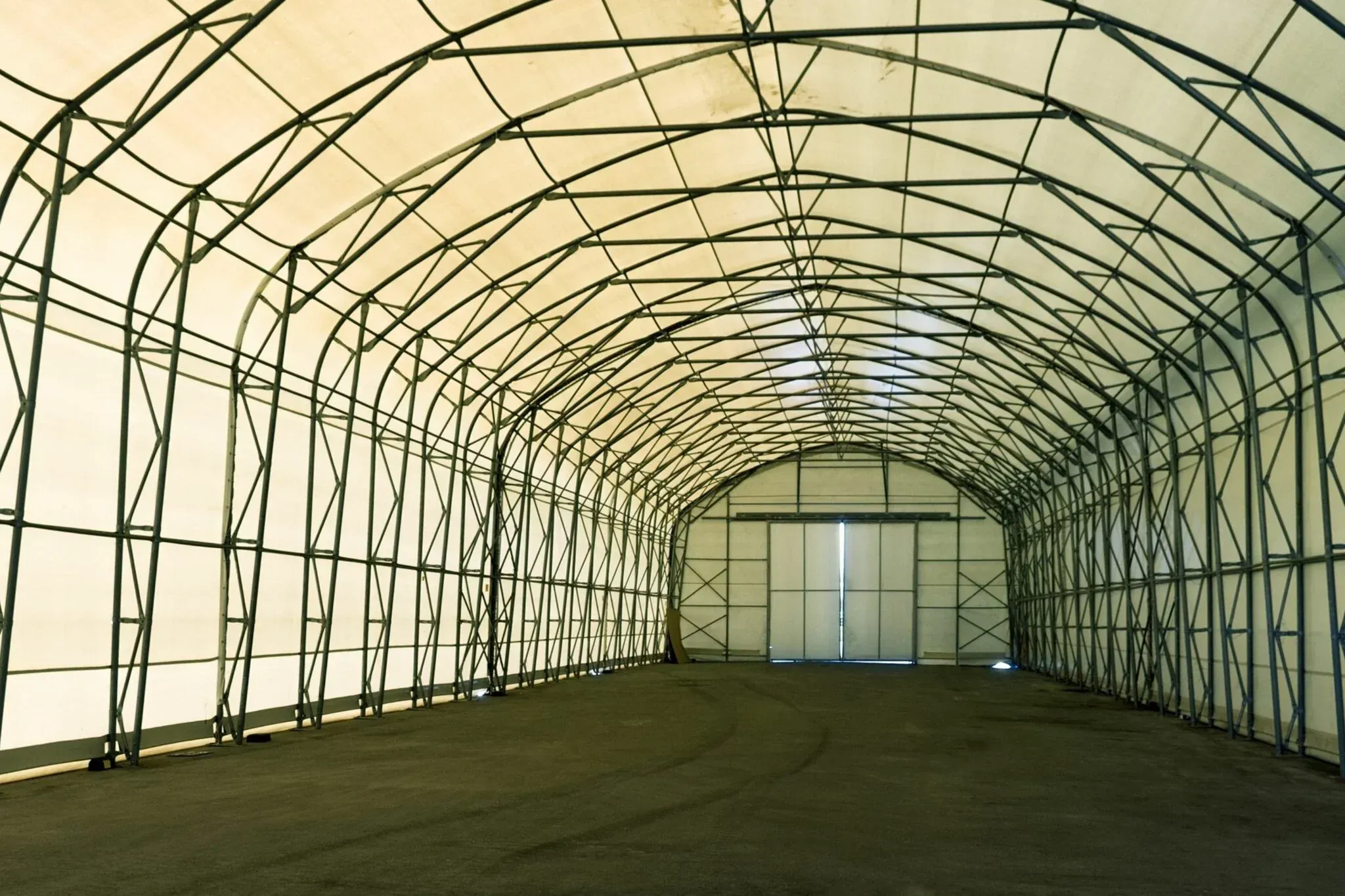
Tent halls have become a versatile solution across many industries — temporary warehouses, event spaces, industrial buildings, even sports facilities. The cover is the single most important element that determines the function, durability and appearance of any tent hall. The right cover material protects against the weather, ensures structural safety and gives the building its visual identity.
Choosing the cover material is a decision that affects many aspects of operation. Cost matters, but so does the planned use, the operating conditions and the expected service life. The right cover ensures that the hall serves for years while maintaining its properties and appearance. This is worth careful analysis.
What requirements does a tent hall cover have to meet?
A tent hall cover has to handle many challenges to ensure structural safety and function. First, the material has to be weather-resistant. It must protect the interior from rain, snow and harmful UV radiation that would otherwise degrade the material.
Mechanical strength is the next requirement. The cover must resist tearing, abrasion and other damage that can occur during operation — strong winds, snow loads, accidental impacts. Material durability is critical for long service life without frequent repairs or cover replacement. The cover should also be easy to clean and maintain, with the option to tailor dimensions and aesthetics to client needs.
The most common materials
Several material families compete in the market. The most popular are PVC, PTFE and specialist shade nets. Each has unique properties that suit specific applications.
When picking a material, consider the planned use of the hall and the operating conditions. The right material protects against the elements while delivering long service life and an attractive finish.
PVC (polyvinyl chloride)
PVC is the most commonly used material for tent hall covers. Its popularity comes from the combination of accessible price and good operational properties. The material is flexible, which makes installation and removal easier. It has high water and UV resistance, effectively protecting the interior from adverse weather.
Abastran specialises in PVC welding, creating durable, watertight seams. Years of experience with this material let us deliver covers of the highest quality, tailored to specific client needs. Our PVC covers are functional and attractive, suiting a wide range of applications.
PTFE (polytetrafluoroethylene)
PTFE — sometimes called Teflon — is a material with exceptional properties for the most demanding projects. Its main advantage is exceptional durability. PTFE covers can serve for several decades without significant property loss. The material is resistant to almost all chemical substances, and the surface has excellent self-cleaning properties — dirt does not adhere to the cover and is easily washed away by rain.
PTFE is commonly used in advanced tent and membrane structures like stadium roofs, amphitheatres and other public buildings. Its exceptional parameters make it an investment in long-term reliability. Abastran has significant experience in PTFE fabrication, enabling delivery of even the most complex projects.
Shade nets and specialist materials
Shade nets are lightweight, breathable materials suitable for event halls, stages and temporary restaurant terrace covers. They provide protection from excessive sun exposure while allowing free airflow. Available in various colours and weights to match the aesthetic of the surroundings.
Beyond standard materials, specialist solutions are available for specific applications. Examples include membranes for military structures (which must meet strict strength and camouflage requirements) and high fire-resistance materials for industrial buildings where fire risk is significant. Abastran offers a wide range of specialist materials tailored to client requirements.
How to pick the right tent hall cover
The right tent hall cover depends on several key factors. First, consider the planned use — a warehouse has different requirements than a venue for outdoor events. Budget matters because material prices vary significantly. Local conditions like sun exposure, wind strength and humidity also influence durability and function.
Abastran offers comprehensive support for tent hall optimisation. Our specialists help clients select the optimal solution by considering all the relevant factors. The result is a tent hall that is functional, durable and ideally fitted to client needs. Optimisation lets you make the most of the chosen material’s properties, translating into long service life and trouble-free operation.
Why work with Abastran?
Abastran has years of experience in the industry, specialising in PTFE fabrication and PVC welding. Our knowledge and skills let us deliver even the most complex projects, always with attention to quality and precision. We offer comprehensive services from professional consulting and design through fabrication and installation.
Our modern production facility, equipped with advanced cutting plotters and welding equipment, lets us produce custom covers ideally tailored to each client’s needs. We can handle even unusual requirements while delivering fast turnaround and competitive prices. Working with us, you can be sure that your project will be delivered with the highest care and the result will meet your expectations.
Contact Abastran for more information and a tailored solution for your tent hall project.