
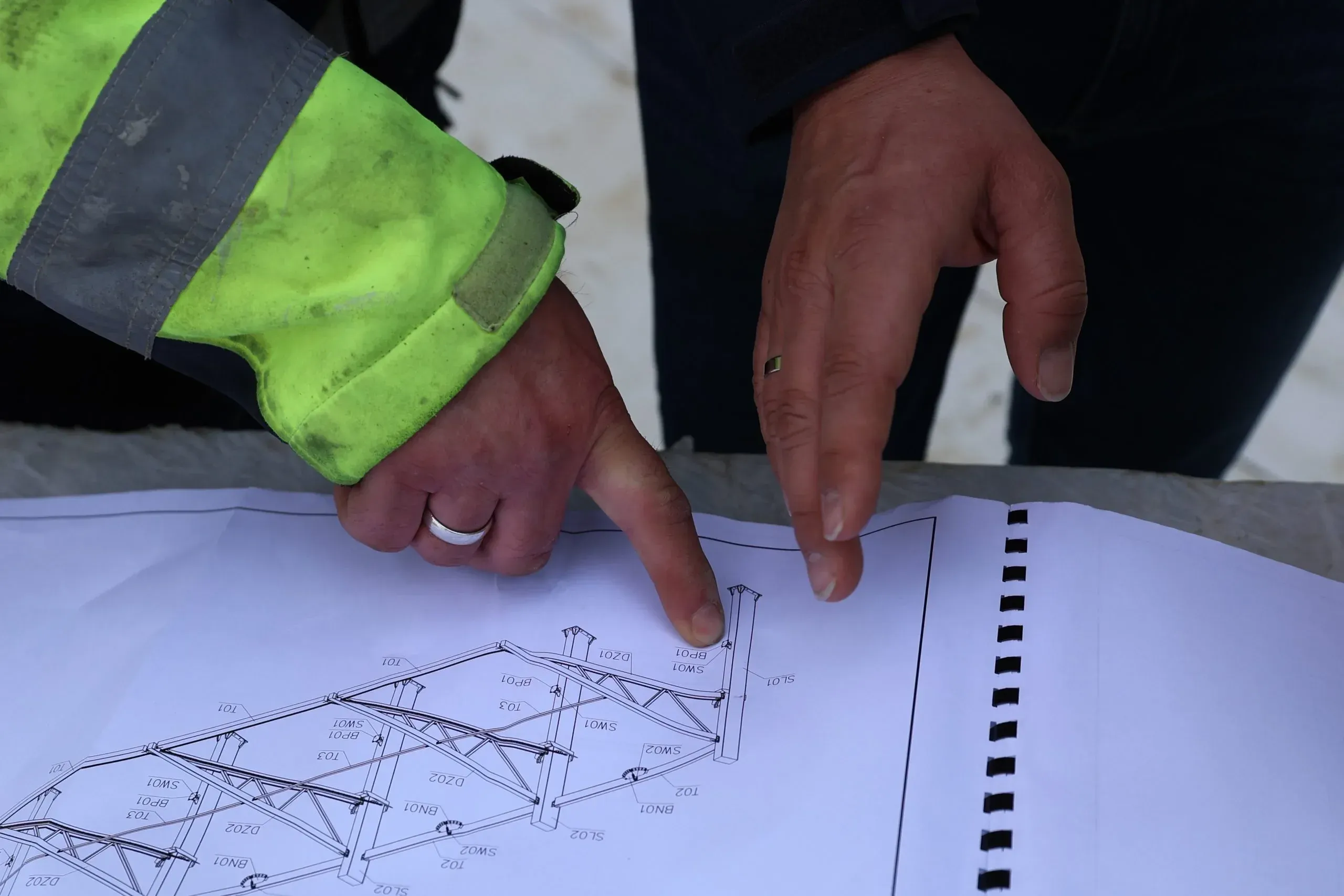
Tent halls have become an increasingly popular versatile and economical solution across many industries. Their flexibility and fast assembly make them an attractive choice for owners needing additional warehouse, production or event space. But before starting an investment, it is worth carefully reviewing current building law to avoid unpleasant surprises and run the process smoothly. This article walks through when notification is enough for a tent hall and when a full building permit is required.
What are tent halls and when are they needed?
Tent halls are lightweight structures made of a solid frame — typically steel or aluminium — covered with a durable membrane. The modular design lets tent halls be tailored to individual needs in terms of dimensions, shape and equipment. They are also mobile, allowing fast assembly, disassembly and relocation.
They find broad use across many sectors. They often serve as temporary or permanent warehouses, production halls, sports facilities, riding arenas, agricultural shelters and event spaces. Their versatility and relatively low investment cost make them an attractive alternative to traditional masonry buildings.
Tent hall notification — when it is enough
The notification procedure is significantly simpler and less time-consuming than obtaining a building permit. It applies to buildings that building law classifies as temporary, intended for use for no longer than 180 days at a given location. After this time the building must be dismantled or moved. For tent halls, the planned operating time must not exceed this period. According to building law, notification is required for tent halls up to 50 m² of footprint and 4.5 m height, located on a plot with a residential or community building.
To notify a tent hall, you submit the appropriate application to the relevant building authority. The application must include a declaration of the right to use the property for construction purposes and, depending on the authority’s individual assessment, sketches or drawings of the planned building. The authority has 21 days to file any objection. No reaction within this period means tacit consent and authorisation to start construction. Exceeding the 180-day operating period without obtaining a building permit is treated as illegal construction with serious legal consequences including demolition orders and financial penalties.
Tent hall building permit — when it is required
If you plan to use a tent hall in one place for longer than 180 days, you need a building permit. This also applies when, regardless of operating time, the hall serves functions requiring permanent ground attachment or compliance with specific standards like thermal insulation. In such cases the tent hall is treated as a standard construction and is subject to the same legal requirements. A permit is also required when the footprint exceeds 50 m², height exceeds 4.5 m, or distance from the property line is less than half the hall’s height.
Obtaining a building permit is more complex than notification. It requires submitting an application with a building design prepared by a licensed designer. The application must also include declarations on the right to use the property, planning decisions where required, and other necessary opinions and approvals.
The decision time is up to 65 days, and the process involves additional costs including administrative fees and designer fees. Costs vary depending on project complexity and location.
There are exceptions where a tent hall can be used longer than 180 days without a building permit. For example, the hall can be erected based on notification and then a building permit obtained before the 180-day period elapses. This is a solution for companies that urgently need to expand warehouse space and do not treat the investment as temporary.
Differences between notification and building permit
The basic difference between notification and building permit is the procedure duration and complexity. Notification is much faster and simpler, requires minimum formalities, and involves lower costs — but it only applies to temporary structures used for up to 180 days. A building permit is more complex, time-consuming and costly but allows permanent installation without the need for disassembly or relocation. Differences also cover the installation method: a permit is required if the hall will be permanently attached to the ground, regardless of operating time, while notification is sufficient for halls not permanently attached.
The choice carries certain risks and benefits. Choosing notification saves time and formalities. The risk is that exceeding 180 days makes the investment illegal construction.
A building permit gives legal certainty and stability but involves more financial and time investment in preparation. Notification is a one-time procedure — once documents are submitted, you can proceed with assembly immediately. A permit is often required for year-round, warehouse and industrial halls.
Practical tips for owners
Before starting the notification or permit process, carefully analyse your needs and capabilities. Define how long you plan to use the hall and what functions it will serve. This is critical information that lets you choose the right procedure. Then gather all necessary documents and information including plot data, planned hall dimensions and materials.
Consult an experienced designer who will help prepare documentation compliant with current regulations. For permit applications, the designer’s role is invaluable as they create the building design. Maintain regular contact with the authority to monitor progress and clarify any doubts. Cooperation with officials and timely document delivery will speed up the entire process.
Abastran services for permit formalities
Abastran specialises in tent hall design and construction and offers clients comprehensive support not only at the project execution stage but also for legal formalities. Through years of experience and industry knowledge, our experts help owners choose the optimal procedure (notification or building permit) and assemble the necessary documentation.
Abastran has many projects where the company actively participated in the formal-legal process. For example, in the construction of a warehouse hall for a logistics company, Abastran advised the client on the notification procedure, prepared the required documents and represented the owner before the authority, allowing smooth, trouble-free operation start. In another case, for a production hall with elevated standards, Abastran supported the client in obtaining the building permit, coordinating design work and ensuring documentation compliance with regulations. The company also offers advanced tent structures and tensile membrane structures.
Contact Abastran for support with your tent hall project.