
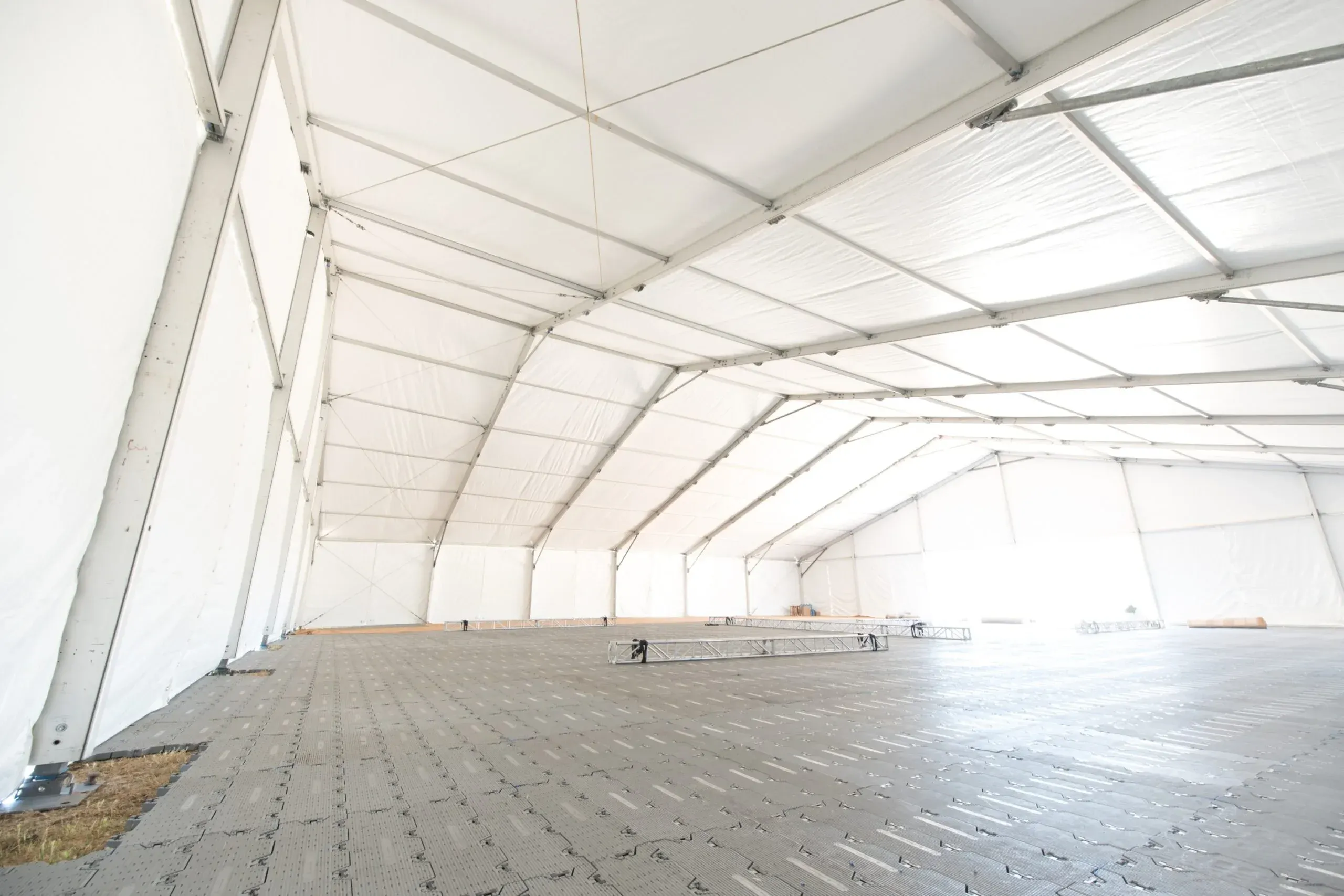
Planning a temporary structure requires detailed knowledge of regulations and technical requirements. These structures, although by definition non-permanent, must meet defined safety standards and comply with building law. Proper preparation for such an investment helps avoid legal problems and ensures safe operation.
Temporary construction in the eyes of the law
A temporary building is a structure intended for use over a period shorter than its technical durability. According to building law, such buildings can be operated for no longer than 180 days. In practice this means the structure must be designed for fast assembly and disassembly, without permanent attachment to the ground.
Common examples include temporary canopies, used during outdoor events and construction work. Temporary buildings must be made from materials that guarantee operational safety, even for short use periods.
Formalities for temporary structures
The legalisation process for a temporary building starts with determining whether a building permit is required or whether notification is sufficient. In most cases, notification to the building authority is sufficient. However, some tent structures of larger size may require a full building permit.
The notification documentation should include a detailed description of the planned investment — technical parameters, planned use period, and foundation method. It should also address the installations to be used and how they will connect to utilities.
Variety of temporary structures
The temporary structure market offers a wide range of solutions for different needs. The basic type is structures not permanently attached to the ground that can be quickly disassembled without leaving traces. Tent hall covers are particularly popular for the flexibility they offer in shaping usable space.
Available solutions also include retail pavilions, kiosks and sports covers. Each must meet defined technical standards and be tailored to the planned use. Material selection is also critical to ensuring safety and operational comfort.
Safety and technical aspects
Despite their temporary character, these structures must meet strict safety requirements. Ensuring stability under various weather conditions, appropriate ventilation and fire protection are critical. Regular technical inspections and reviews are essential to maintaining operational safety.
Installations in temporary structures (electrical, ventilation) must comply with current standards. Particular attention should go to weather protection and the option of fast disassembly when needed. Proper technical maintenance is critical to user safety.
Summary
Building a temporary structure requires careful planning that addresses many legal and technical aspects. Compliance with use periods, proper documentation and care for structural safety are critical. Proper preparation and execution let you use the temporary building safely according to its intended purpose.
If you are planning a temporary building for your business, contact Abastran — we will help you navigate the formalities and deliver the right structure for your needs.