
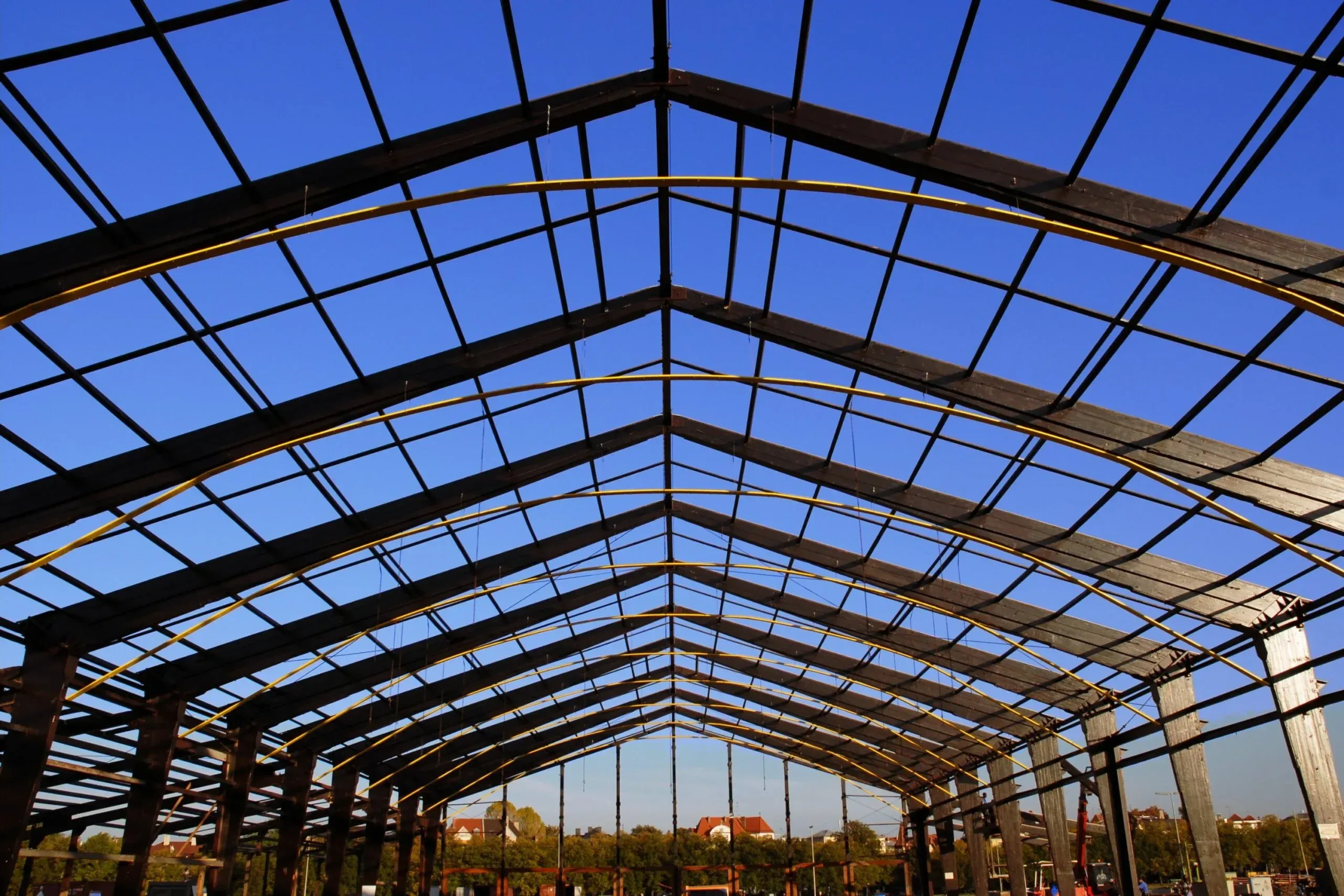
Picking the right hall type is a strategic decision that affects the success of any industrial or warehouse investment. Comparing a steel hall with a masonry hall requires a careful analysis of many factors, from initial cost to future adaptability. This article walks through both options to help you make the optimal choice.
Basic differences
The fundamental difference between a steel hall and a masonry hall is the construction technology and the materials used. Steel structures are characterised by lightweight, modular construction that allows fast assembly and flexible adaptation to client needs. The skeleton of a steel hall consists of columns and trusses, with cladding made from sandwich panels or sheet metal.
Masonry halls use traditional construction technology — hollow blocks, bricks or precast concrete elements. The construction is more massive and requires more substantial foundations. Load-bearing walls made from ceramic or concrete materials provide natural thermal and acoustic insulation, but the build process is significantly longer than a steel hall.
Cost and build time
Economics is often the key factor when picking between hall types. Steel halls offer a significant advantage in shorter build time — assembly of a typical structure takes 2–3 weeks, while building a masonry hall can take 4–5 months. Tent structures are an even faster option, particularly useful for short-term projects.
Initial costs are usually lower for steel halls, mainly because of smaller foundations and shorter build time. Masonry halls require larger initial investment, but can offer lower operating costs in the long term, particularly for heating and cooling.
Durability and function
Durability is one of the most important parameters when picking a hall type. Masonry halls have very long service life and high weather resistance. Tent hall and steel hall covers also offer significant durability but may need more frequent maintenance.
Function depends mainly on the planned use. Steel halls allow longer spans without intermediate supports, which matters for warehouses and production facilities. Masonry halls are better suited to applications that need stable interior temperatures.
Adaptability and expansion
Flexibility for future modification is another important consideration. Steel halls offer significantly more options for expansion and adaptation. The modular construction makes it easy to add segments or modify existing elements without major intervention in the overall structure.
Masonry halls are less flexible for expansion. Modifications usually require major construction work and significant cost. However, the solid construction allows easy interior adaptation through partition walls and additional installations.
Picking the optimal solution
The choice between a steel hall and a masonry hall should be driven by the specific needs of the owner and the planned use. Steel halls work better for projects that need fast delivery and future flexibility. They are also more attractive in terms of initial investment cost. Masonry halls are a good choice for owners looking for a durable, solid building with high thermal insulation, who are not constrained by project timeline.
If you are weighing the options for an industrial or warehouse project, contact Abastran — we will help you specify the right hall for your operational and budget needs.