
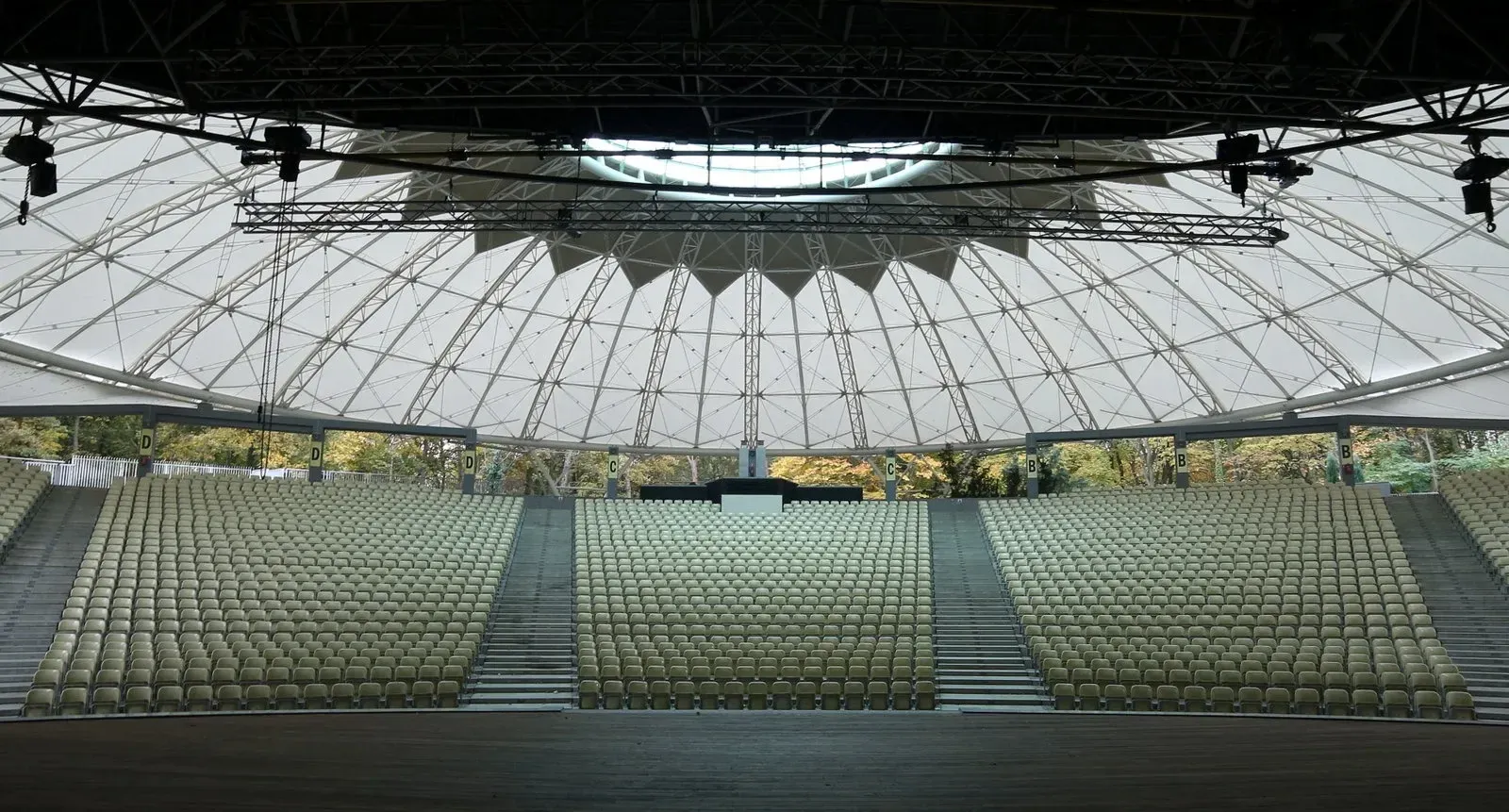
The number of covered sports facilities in Poland has grown by more than 40% in the past decade, and the trend continues across Europe. Operators want their infrastructure to work year-round, regardless of weather, and the technology options have multiplied to match that demand. Picking the right roofing system is no longer a one-line decision — there are real differences between air-supported domes, steel-frame halls, ETFE cushion roofs and hybrid combinations of all of the above.
This article lays out the key selection criteria with practical examples that should help an operator make an informed decision.
The key selection criteria
The starting point is a clear analysis of who will use the facility and how. Will it host predominantly indoor sports, or does it need to keep the option of an open space with seasonal cover? The local climate matters enormously — high snow loads in mountain regions push the engineering requirements upward and may require reinforced systems compliant with EN 1991-1-3.
Sport-specific requirements also drive the choice. A football pitch needs span and ceiling height that differ entirely from those of tennis courts or basketball halls. Multi-purpose flexibility — the ability to host non-sporting events as well — can substantially improve the financial return on the project. At Abastran we specialise in tensile membrane and steel structures that can be tuned to match the specific demands of different sports.
Roofing technology — the main options
Air domes (pneumatic structures)
Air-supported domes are an excellent option for operators looking for flexible or seasonal solutions. Under most local regulations, structures installed for periods under 180 days do not need a building permit, which dramatically simplifies the formalities. The technology works particularly well for tennis courts, where double-membrane PVC systems deliver up to 40% energy savings compared to traditional alternatives.
Air domes also work for swimming pools and football fields, making them one of the most flexible categories on the market. The investment is modest, the installation is fast, and the structure can be removed and stored at the end of the season if needed.
Steel structures
Steel-frame halls offer durable, permanent solutions with the option of advanced thermal insulation systems. For prestigious projects, ETFE roofs are increasingly used, combining lightweight construction with exceptional durability and light transmission. Hybrid solutions — fixed steel frames combined with membrane roof elements — are an emerging trend that combines the best of both worlds. Our experience designing and producing pneumatic and membrane systems lets us advise on the right combination for the specific brief and budget.
ETFE and membrane roofs
For permanent installations with high architectural ambition, ETFE foil cushion roofs and PTFE-coated fibreglass membrane roofs are the premium options. They offer exceptional service life, daylight transmission and visual impact — and they have become the default for high-profile stadium and aquatic facility projects.
Materials — durability and economics
The choice of materials drives durability and long-term operating cost. PVC membranes typically have a 15–25 year service life and high UV resistance. Polycarbonate panels offer excellent acoustic insulation and impact resistance, which is particularly relevant for sports facilities. Galvanised steel structures need periodic maintenance, typically every 5 years.
Newer options on the market include self-cleaning coatings and integrated photovoltaic systems that can significantly reduce operating costs. For outdoor pools, PVC membranes with anti-algae coatings can reduce cleaning costs by up to 30%. At Abastran we offer professional PTFE fabrication and PVC welding, guaranteeing the highest fabrication quality for sports facility roofs.
Legal and administrative aspects
Building a sports facility cover comes with regulatory requirements. Permanent structures fall under building permit rules, while temporary structures are governed by building law specifically. National sports federation requirements (lighting, ventilation) also need to be considered.
Recent updates to Polish building regulations exempt mobile structures up to 300 m² from the building permit requirement, opening interesting opportunities for school and community projects. Fire regulations also affect material selection and design — they should be factored in early. Get in touch with our specialist team and we will walk you through the formalities that apply to your project.
In summary
Picking the optimal roofing system for a sports facility requires a comprehensive approach that considers technical, economic and legal aspects. Before committing, run a pre-investment audit and consult an experienced designer who will consider the full lifecycle of the building. Modern trends like integrated structural monitoring can additionally improve safety and operational efficiency.
If you are planning a sports facility roofing project, contact Abastran — we will help you evaluate the options and propose the right system for your brief, your site and your budget.