
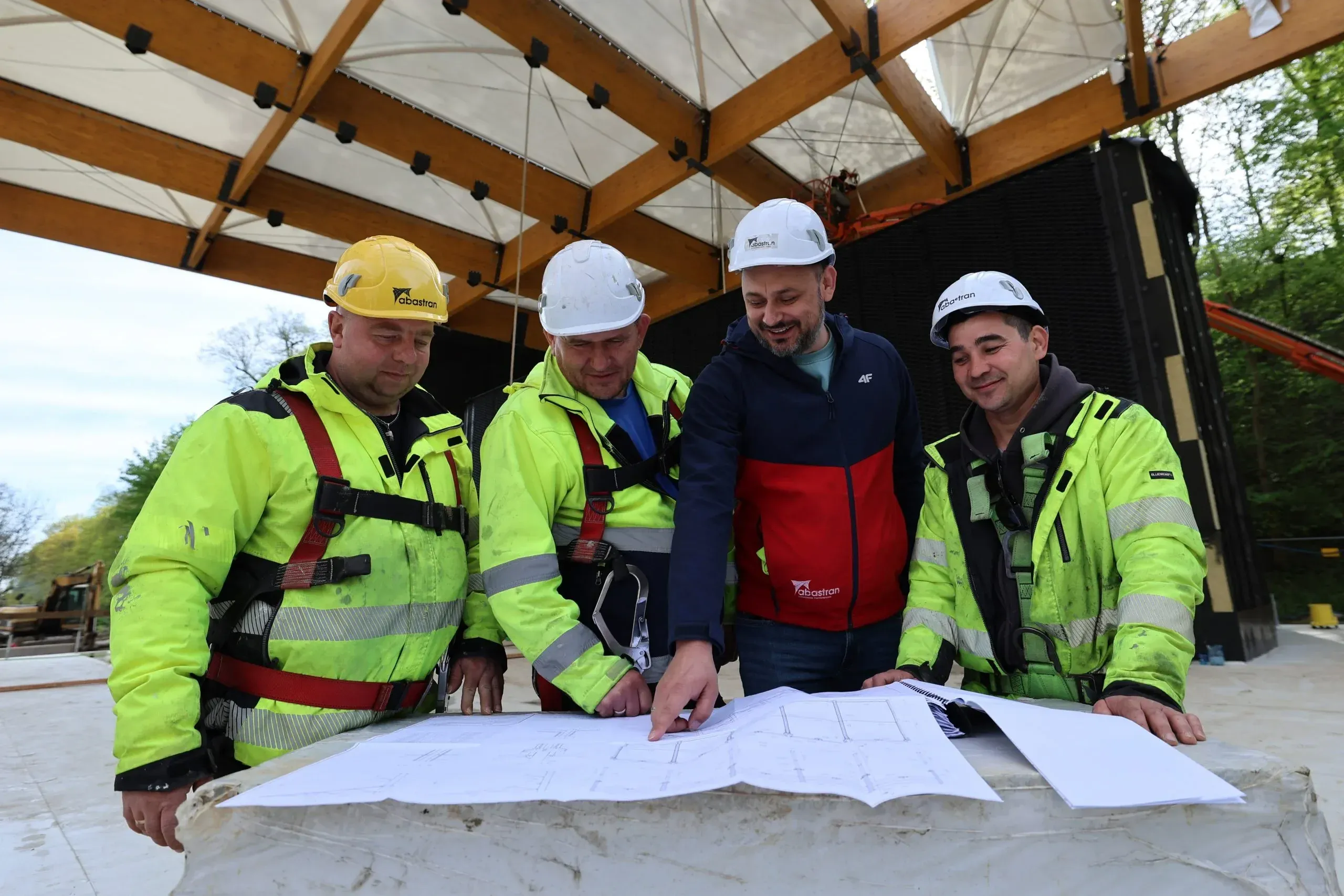
The growing popularity of lightweight structures in modern architecture has brought with it the need to understand specialised technical documentation. Designs for membrane, steel and pneumatic canopies differ significantly from traditional construction documentation and require a different interpretive approach. Precise analysis of technical documentation is the foundation of structural safety and durability, particularly for buildings exposed to extreme weather conditions.
Technical canopy documentation is a complex set of information that requires specialist knowledge. At Abastran we work daily with designs for various structure types, helping owners understand the technical aspects and optimise the structural solutions for specific needs.
Foundations of canopy technical documentation
Every canopy design contains several key elements that deserve particular attention. The basics are plans, sections and assembly details, presenting the structure from various perspectives. Plans show the top view, allowing understanding of the overall structural layout, while sections reveal the internal structure and how elements connect. Assembly details focus on critical points like connections, fixings and joints between different materials.
It is worth distinguishing concept drawings from detailed design drawings. Concept drawings present the general project idea and serve initial approval, while detailed design drawings contain precise dimensions, material specifications and assembly instructions essential for execution. When analysing technical documentation, always verify the drawing scale and units of measurement — apparently small discrepancies can lead to major execution errors. Our experience designing membrane structures shows that this is exactly the stage where potential problems can be identified and optimisations introduced that save time and money during execution.
Specifics of different structure types
Membrane structures require particular attention to stress analysis and patterning (cutting pattern layout). Technical documentation for such canopies includes information on force distribution in the membrane, which directly affects the shape and stability of the entire structure. Understanding how the material will behave under various loads is critical, so these designs often include computational analysis results showing deformations under wind or snow loads.
For steel structures, documentation focuses on profile designations, welded connections and joint details. ETFE designs are distinguished by pressure specifications for pneumatic chambers, defining not only system operating parameters but also behaviour in fault scenarios. When analysing ETFE designs, particular attention should go to the light transmission coefficient, which is critical to user comfort. At Abastran we specialise in designing all these structure types, offering comprehensive support from concept through delivery.
Decoding technical symbols
The legend of symbols is an indispensable element of any technical design. In canopy documentation we encounter many specific symbols — from anchors through to PVC weld marks. Understanding these symbols is critical to correct interpretation. Material designations indicate the components used, and it is important to distinguish between similar materials like PTFE and PVC, which despite apparent similarity have different properties and applications.
Load symbols like wind and snow indicators inform about the forces expected on the structure. Their correct interpretation lets you assess whether the design meets the requirements for the specific geographic location and climate conditions. A good practice is to create your own symbol glossary for frequently encountered manufacturers, which significantly speeds up documentation analysis. Our experience in PVC welding and PTFE fabrication lets us precisely interpret even the most complex technical designations.
Technical parameters and regulatory compliance
Material strength is one of the most important aspects of any canopy design. Technical documentation includes classification of fabrics and films, defining their strength parameters and durability. For temporary structures, safety factors that account for potential overloads and material fatigue are particularly important. Anchoring system specifications define how loads are transferred to the ground or existing structures.
Standard PN-EN 13782 for temporary structures is the legal basis that documentation must satisfy. It defines minimum safety requirements, test procedures and assembly/disassembly guidance. For pneumatic system commissioning, pressure test protocols confirming system tightness and strength are critical. Always request certification documents for all load-bearing elements to confirm compliance with current standards. At Abastran we put particular emphasis on regulatory compliance, ensuring full safety for our clients.
If you need professional help interpreting canopy technical documentation or are planning a membrane, steel, ETFE or tent structure project, contact our team of experts. Years of industry experience let us offer solutions that combine innovation with the highest safety standards.