
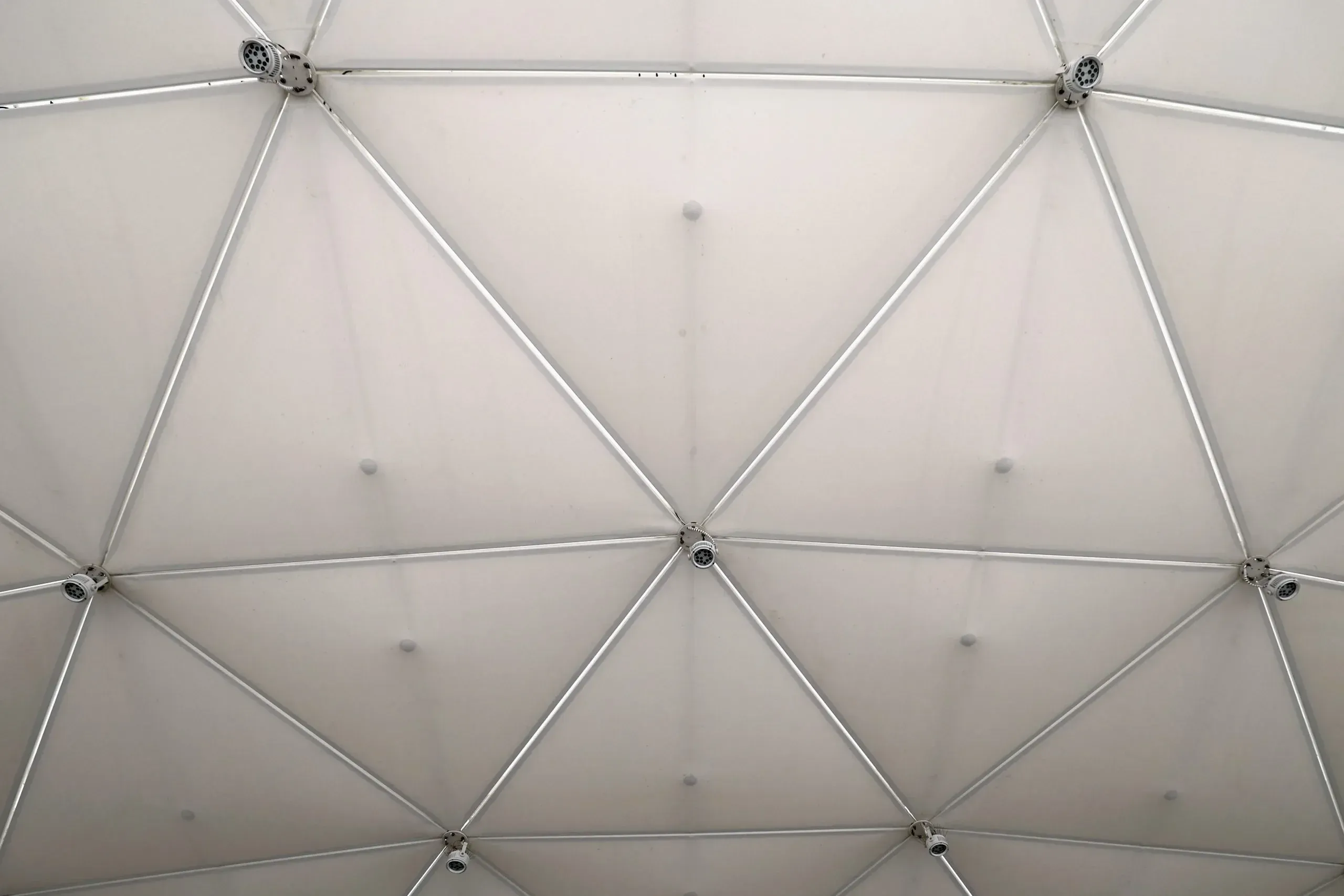
You have certainly noticed how membrane canopies are changing the face of modern architecture. Their lightness, elegance and almost unlimited possibilities for shaping space mean we increasingly see them over stadiums, sports halls, amphitheaters and shopping centres. They are not just functional covers but real architectural works of art. To fully enjoy their benefits though, you need to remember one key aspect: regular professional maintenance. That is what guarantees the safety, durability and impeccable appearance of your investment for years.
What is a membrane canopy?
In simplest terms, a membrane canopy is a structure where the main role is played by specialised tensioned technical fabric. It creates the roof and carries the loads. The most common materials are PVC reinforced with polyester, exceptionally durable PTFE on a fibreglass base, and innovative ETFE foil — often in the form of air-filled cushions. Each has unique advantages. PVC is an excellent compromise between cost and quality. PTFE delights with durability and ease of maintenance (often with self-cleaning properties). ETFE delivers stunning visual effects through transparency and lightness.
Why are these structures so popular? Mainly because of their low weight, huge tensile strength and flexibility that lets architects create truly spectacular forms. Add high weather resistance. They are ideal for covering large spaces — stadiums, halls, amphitheaters, transit stations and shopping centres. But they also work in smaller scales, covering terraces or building entrances. They give buildings lightness, modernity and prestige.
Maintenance is the foundation — why it matters
Regular professional maintenance of your membrane canopy is an absolute necessity. It is not a luxury but the key to long service life, safety and aesthetics. Through systematic inspections you can detect minor problems early — small damage, leaks or first signs of contamination — before they become serious failures and generate significant costs. Professional maintenance minimises the risk of material degradation from sun, rain or pollution, protecting the integrity of the entire structure.
Neglecting maintenance has unpleasant consequences. Dirt and moisture promote algae and fungal growth that not only mar the membrane but can damage it. Undetected cracks or wear lead to leaks, and in extreme cases even to weakening of the supporting structure from accumulated water or ice. Ignoring service recommendations shortens membrane life and increases failure risk that can threaten user safety. Treat maintenance as an investment in operational confidence and asset protection.
How to organise inspections and service
Regular technical inspections are the foundation of effective maintenance. They allow expert assessment of canopy condition and planning of necessary actions. We recommend a full inspection at least once a year. It is also worth ordering an additional inspection after any severe wind, heavy snowfall or hail. This systematic approach lets you continuously monitor membrane condition and quickly respond to any problems.
What does a professional inspection cover? Above all, careful assessment of the membrane itself: looking for mechanical damage (abrasion, cracks), checking seam condition, assessing contamination levels and looking for material ageing signs. Then we check all elements securing the membrane to the structure: cables, bolts, profiles — checking completeness, condition and appropriate tension. The supporting structure and water drainage systems are also assessed. Working with a specialist service company with appropriate experience guarantees that nothing will be overlooked.
Cleaning and care — how to do it right
Regular cleaning is not just about aesthetics but also an important maintenance element that prevents permanent contamination and microorganism growth. How to safely clean a membrane? Use only mild neutral pH cleaning agents — preferably those recommended by the manufacturer — diluted in water. Hand washing with a soft brush, sponge or microfibre cloth works best. Absolutely avoid pressure washers from close range or under excessive pressure as they can damage the delicate coating.
How often to clean? It depends on the building location and membrane type, but generally we recommend thorough washing once or twice a year. For heavy contamination like bird droppings, remove them as soon as possible to prevent permanent staining. Remember: never use aggressive chemicals (solvents, bleaches), hard brushes or sharp tools. They can irreversibly damage the membrane. If you are not sure how to approach this, leave the cleaning to a professional company.
What to avoid — common usage and maintenance mistakes
Even with the best intentions, errors during operation and maintenance can shorten the life of your canopy. The most common ones to avoid:
- Mechanical damage — be careful with sharp objects near the membrane during normal use and maintenance work. Never remove snow or ice with sharp tools (e.g. metal shovels)
- Improper cleaning — using aggressive chemicals or hard brushes is a quick path to destroying the membrane’s protective layer
- Neglecting inspections — skipping regular inspections prevents early detection of problems that can become serious and expensive to repair
- Ignoring recommendations — manufacturers and designers know best how to care for a specific structure. Disregarding their guidance can lead to warranty loss and shortened canopy life
Awareness of these potential pitfalls and following proper operating principles will help you avoid many problems and enjoy your canopy for years.
Caring for a membrane canopy is not an unpleasant duty but conscious action to protect your investment and ensure user safety. Regular maintenance, performed by professionals or according to their guidance, will let you enjoy all the benefits of this modern solution for a long time. Working with experienced service technicians and keeping proper documentation is the foundation of effective management. If you have any questions about maintaining your canopy, need professional advice, or are looking for a proven service partner, contact the experts at Abastran. We are happy to share our knowledge and experience.