
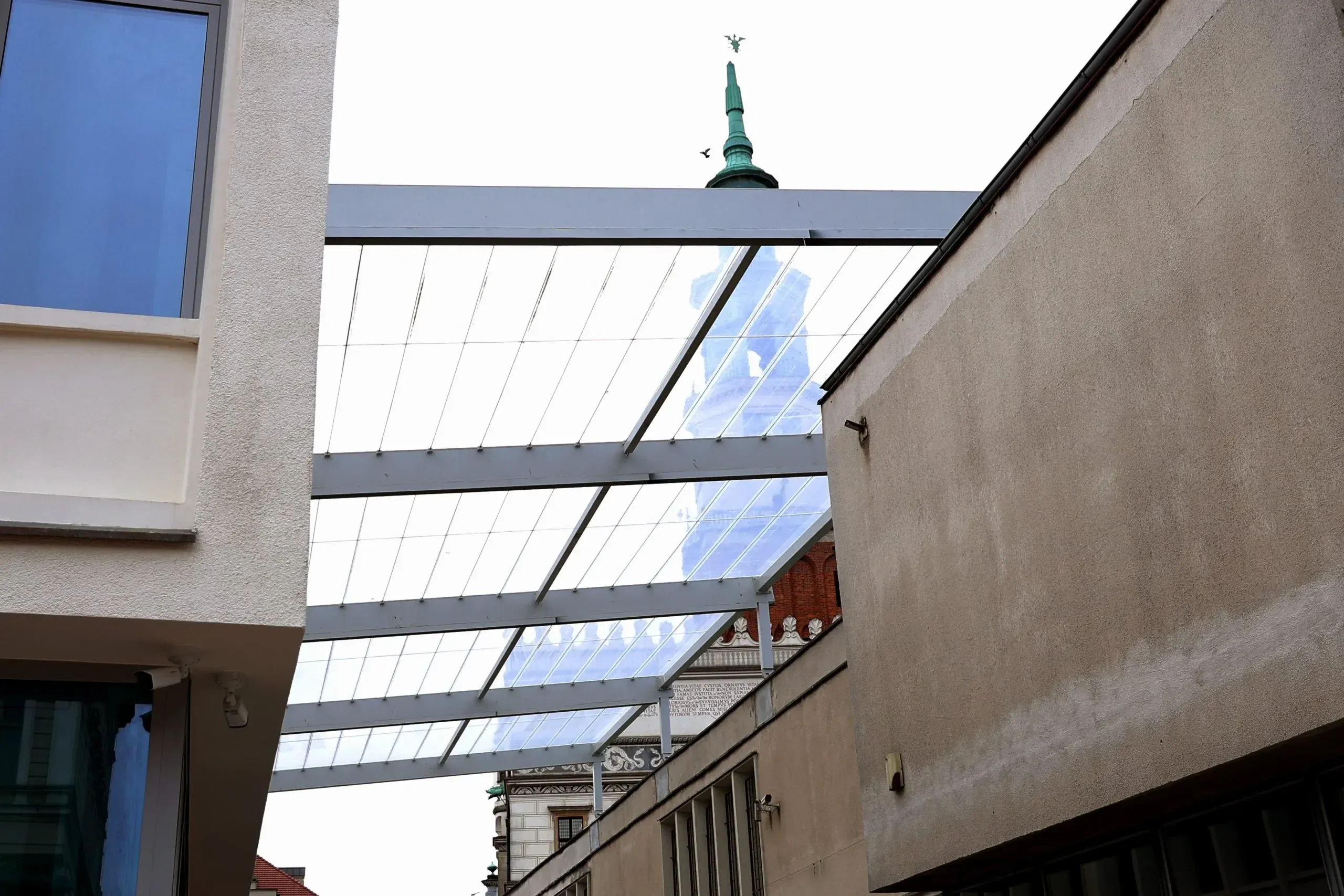
Transparent roofs and façades have become a defining feature of modern architecture. The choice of material is critical to both the aesthetic and the functional performance of the building. The two main options are ETFE (ethylene tetrafluoroethylene) and traditional glass. This article compares them across the parameters that actually matter when picking a material for a project.
ETFE — properties and advantages
ETFE is a modern fluoropolymer foil that has become a mature alternative to glass over the past two decades. It is supplied as thin foil that gets formed into pneumatic cushions or single-layer tensioned envelopes for roofs, façades and other tensile structures.
Light transmission
ETFE transmits up to 95% of natural light — and unlike glass, it diffuses the light evenly, reducing the risk of glare inside the building. That makes ETFE particularly suitable for spaces where bright but soft daylight is critical to the brief.
Weight
ETFE foil is roughly 1% the weight of an equivalent glass panel. For large-area roofs and façades that translates directly into lighter supporting structures, smaller foundations and lower overall construction cost. On a stadium-scale project the savings are dramatic.
Strength and elasticity
ETFE handles tension exceptionally well. Wind, hail and the other hazards a building envelope faces are managed gracefully. The foil can be stretched to roughly three times its original length before failure, so impacts and short-term overloads are absorbed without damage.
UV and weather resistance
ETFE is essentially inert to UV radiation. It does not yellow, it does not become brittle, and it holds its properties for 30+ years of outdoor exposure. Glass also handles UV, but the supporting frames and seals usually do not — and that often becomes the limiting factor for the lifetime of a glass system.
Thermal performance
Single-layer ETFE has worse insulation properties than insulated glass. The trick is the cushion: trapped air between two or three foil layers gives meaningful thermal performance comparable to insulated glazing. Multi-layer ETFE cushions reach U-values that compete directly with high-spec architectural glass.
Durability and maintenance
ETFE is essentially self-cleaning. The smooth low-energy surface releases dirt under rainfall, which dramatically reduces the maintenance burden compared to glass. There is no equivalent of window cleaning.
Glass — properties and advantages
Glass has been used in construction for centuries and remains the default for transparent surfaces in many applications. Modern tempered and laminated glass technology pushes its mechanical properties significantly beyond what was possible even twenty years ago.
Light transmission
Glass — particularly in roof and façade applications — provides excellent transparency. It is worth noting that glass can produce mirror-like reflections that create visual problems in some projects. ETFE diffuses light without producing the same kind of reflection.
Mechanical strength
Modern tempered glass has high impact resistance and meets stringent safety standards. In high-traffic environments where mechanical hazards are real — schools, transit stations, public squares — tempered glass is well established.
Scratch resistance
Glass is essentially scratch-proof in normal use. That makes it the preferred material for façades where surface aesthetics are critical and the cleaning regime is intense.
Aesthetics
Nothing matches glass for the particular aesthetic of crystalline transparency. Glass façades are an essential feature of contemporary office buildings and high-prestige projects, and the visual signature is hard to replicate in any other material.
Acoustic insulation
Glass — particularly multi-pane insulated glazing — has significantly better acoustic insulation than ETFE. For buildings in noisy locations like city centres, that can be a decisive factor.
ETFE vs glass — direct comparison
When you look at ETFE structures and glass head to head, several differences stand out.
Light transmission
Both materials offer high light transmission. ETFE has the edge on uniform light distribution and glare elimination, which is particularly relevant for large enclosures where direct sun could cause overheating or visual problems.
Weight
ETFE wins here decisively. Lower roof weight means lighter supporting structures, smaller foundations, and lower construction costs — particularly significant on long-span projects like stadiums and large halls.
Cost and durability
ETFE is generally cheaper than glass both in material cost and installation cost. It is also more durable in challenging weather and requires less maintenance over its service life.
Aesthetic and acoustic
Glass wins on the specific aesthetic of high-end commercial architecture and on acoustic isolation. For projects where elegance and quiet matter, glass is still the right answer.
In summary
The choice between ETFE and glass depends on the specific brief. ETFE is the right answer when light weight, design freedom, energy efficiency and long-term durability matter most — stadium roofs, large atria, swimming pools, conservatories. Glass is the right answer for projects where the specific aesthetic, scratch resistance and acoustic performance of glass make it irreplaceable — high-end office façades, prestige commercial projects.
If you are weighing ETFE against glass for a project, contact Abastran — we specialise in ETFE structures and we can help you assess whether ETFE is the right fit and how to specify it properly.