
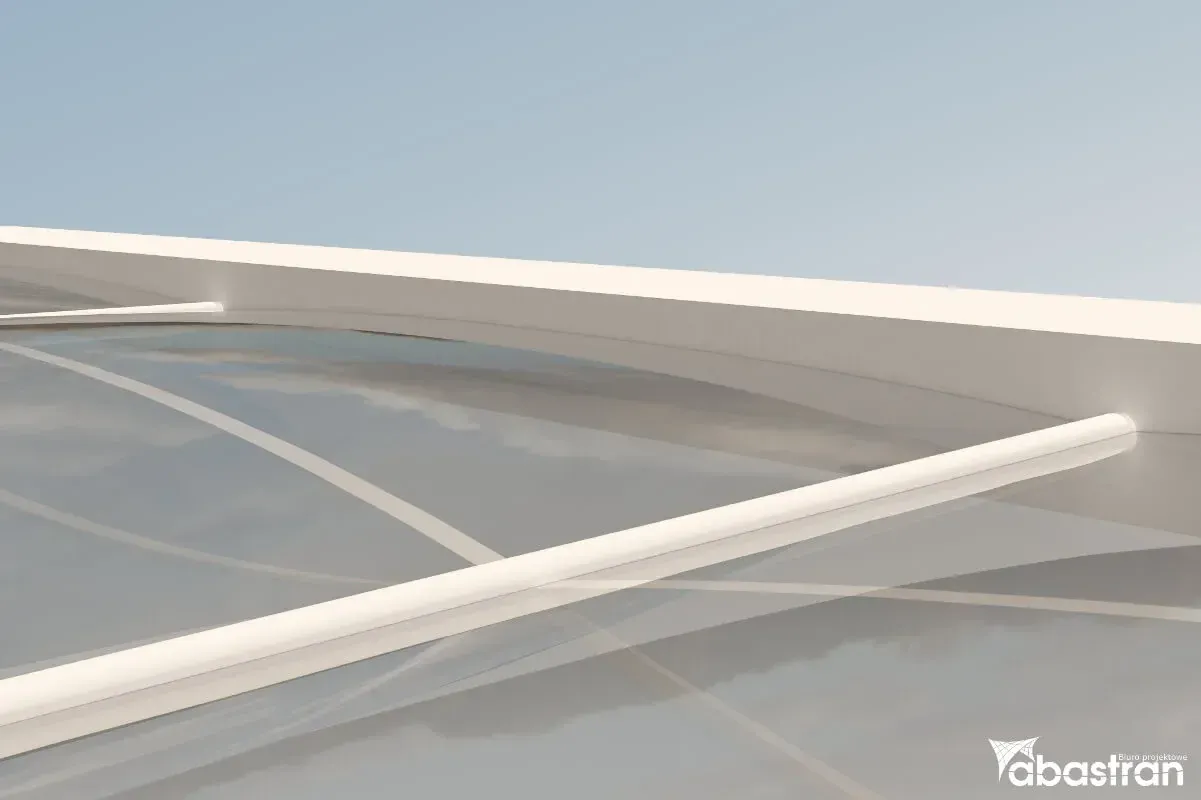
ETFE foil — short for ethylene tetrafluoroethylene — has become one of the most distinctive materials in contemporary architecture. The combination of properties it offers opens design possibilities that simply did not exist with traditional materials.
Originally developed for the aerospace industry in the 1970s, ETFE found its first major architectural application on the Allianz Arena in Munich and has been steadily winning ambitious projects ever since. The production technology has matured continuously, improving the technical parameters and expanding the range of viable applications. Today ETFE is the default material for serious projects where weight, daylight and design freedom matter — a genuine alternative to glass and polycarbonate.
Technical properties
ETFE foil is exceptionally light — roughly 100 times lighter than glass — which lets architects design slim, lightweight supporting structures. At the same time it is mechanically strong, resistant to tearing and capable of stretching to roughly three times its original length before failure. ETFE foil also transmits up to 95% of natural light, including UV radiation.
It has excellent resistance to weather, UV radiation and chemicals. The surface is self-cleaning — contamination is washed away by rain. The foil is flame retardant and meets stringent fire safety standards.
Applications in architecture
ETFE foil works across a remarkable range of architectural projects, from roofs and façades to complex pneumatic structures. The unique combination of properties allows architects to create innovative, eye-catching forms that traditional materials cannot match.
Roofs and overhead enclosures
The most common application is roofing. Because the foil is so light, large open spaces can be covered without heavy supporting structures. That matters most on sports facilities, exhibition halls and shopping centres, where uninterrupted floor space is critical to the brief.
ETFE roofs are not just functional — they are visually distinctive. The foil can be coloured or printed with patterns (frit), giving architects significant freedom to create unique and visually attractive buildings. The outdoor stage in Myszków is one example of an ETFE foil applied to a stage canopy, where the lightweight, durable membrane protects the venue from the weather.
Façades and building skins
ETFE is increasingly used as a façade material. Buildings with ETFE façades are light, transparent and can take any shape. They have a futuristic, distinctive look and can be backlit at night for dramatic visual effects. Compared to glass, ETFE cuts the load on the supporting structure significantly while opening up design freedom that glass cannot match.
Pneumatic and membrane structures
ETFE is the natural material for tensile membrane structures where light transmission is critical. The flexibility and strength let architects design lightweight, durable structures with complex shapes — domes, arches, undulating surfaces, and other unconventional geometries that give buildings a distinctive character.
ETFE structures are common in sports, recreation and cultural venues, where they serve as roofs, screens or decorative elements. The Allianz Arena in Munich is the textbook example: its façade is built from pneumatic ETFE cushions that can change colour, creating a striking visual effect that is recognisable worldwide.
Notable ETFE projects
ETFE in architecture is best understood through specific built examples. From sports facilities through commercial centres to public buildings, ETFE has proven its versatility and functionality across many high-profile projects.
Sports and recreation
The Allianz Arena in Munich is the most famous example of ETFE in sports architecture and remains a textbook reference. Its unique façade made it an icon of modern stadium design. Another example is the Beijing National Aquatics Centre — the “Water Cube” — whose façade and roof are built from ETFE cushions that create a striking blue water-like structure.
ETFE is also common in smaller sports facilities like pools, tennis courts and indoor sports halls. The lightness and translucency create bright, spacious interiors that are ideal for sport and recreation.
Commercial and public buildings
ETFE works well in commercial and public buildings too. The Khan Shatyr shopping centre in Astana, Kazakhstan, is a striking example — the roof is built from ETFE foil tensioned over a steel structure, creating a comfortable microclimate inside while filling the space with natural light.
Why ETFE works
The advantages of using ETFE in architecture are significant — both aesthetic and functional. It enables lightweight, daylit, energy-efficient buildings that stand out from traditional construction.
Lightness and strength
The defining advantage is the combination of low weight and high strength. Large open spaces can be covered without heavy supporting structures, which cascades into smaller foundations and lower construction costs. The light weight also makes transport and installation easier — particularly important for complex or unusual projects. Material strength gives long service life and minimises the risk of damage.
Light transmission and energy efficiency
ETFE transmits up to 95% of natural light. Buildings with ETFE roofs or façades are naturally daylit, which lowers electricity demand for artificial lighting. Multi-layer pneumatic cushions provide thermal insulation while still letting plenty of light through, improving the energy performance of the building and lowering heating and cooling costs.
Weather resistance and durability
ETFE is exceptionally resistant to UV, rain, snow and strong winds. Constructions stay attractive for decades without significant degradation or frequent maintenance. The self-cleaning surface keeps the building looking fresh without operator intervention, lowering operating costs further.
The future of ETFE
ETFE is a material with significant remaining potential, and it will play a growing role in modern architecture. Research is improving the foil’s properties and developing new production technologies. One direction of work is variable-transparency ETFE that can dynamically adjust to changing light conditions and user needs.
The growing focus on sustainability and lower embodied carbon plays directly to ETFE’s strengths — it is light, recyclable and energy-efficient in operation. Expect to see ETFE in more projects that prioritise innovation, aesthetics and sustainability over the next decade.
If you are planning a project where ETFE could be the right answer, get in touch with Abastran — we will help you scope the design and specify it properly.