
Logo UE
Logo Abastran

Zadaszenia zapleczy technicznych – funkcjonalność w służbie estetyki scen plenerowych

Zadaszenia zapleczy technicznych – funkcjonalność w służbie estetyki scen plenerowych

W projektowaniu przestrzeni scenicznych kluczowe jest połączenie funkcjonalności z estetyką. Zadaszenia zapleczy technicznych, takich jak reżyserki, kosze na śmieci czy przejścia podziemne, pełnią istotną rolę w organizacji wydarzeń plenerowych. Jednak ich odpowiednie zaprojektowanie i zintegrowanie z całą kompozycją sceny może znacząco wpłynąć na odbiór całej przestrzeni.


Reżyserki – serce techniczne sceny

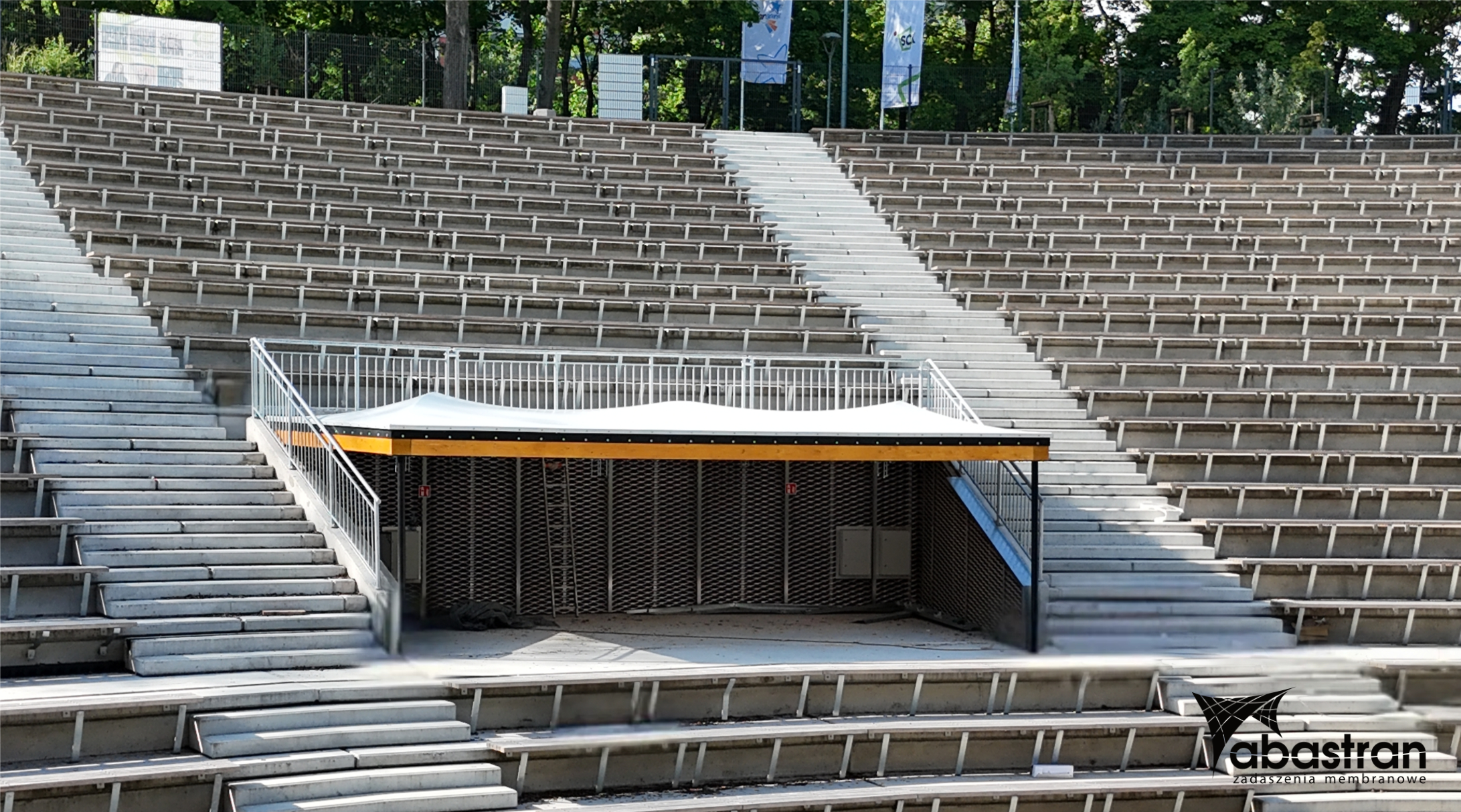
Reżyserki to miejsca, w których koordynowane są wszystkie aspekty techniczne wydarzenia. Ich zadaszenie powinno zapewniać nie tylko ochronę przed warunkami atmosferycznymi, ale także harmonijnie wpasowywać się w otoczenie. Przykładem może być realizacja w Stargardzie, gdzie firma Abastran wykonała zadaszenie reżyserki umieszczonej na trybunach – konstrukcja ta nie tylko zabezpiecza sprzęt i obsługę, ale również wizualnie współgra z całą architekturą amfiteatru. Dodatkowo, w tym samym obiekcie zadaszono również strefy gospodarcze – kosze na śmieci oraz wejście do zaplecza sanitarnego. Wszystkie te elementy, dzięki spójnym materiałom i detalom, tworzą jednolitą całość, nie naruszającą odbioru przestrzeni widowiskowej.


Kosze na śmieci – detale, które tworzą całość

Choć często niedoceniane, kosze na śmieci są niezbędnym elementem każdej przestrzeni publicznej. Ich zadaszenie może przybierać formę lekkich pergoli czy ażurowych konstrukcji, które nie tylko maskują funkcjonalność, ale także wpisują się w estetykę całej sceny. W projektach Abastran, takich jak wspomniana realizacja w Stargardzie, zastosowano nowoczesne formy i materiały, które harmonizują z otoczeniem, tworząc spójną kompozycję przestrzenną.


Podziemne zaplecze – ukryta infrastruktura techniczna

Podziemne zaplecze sceny to przestrzeń, która często pozostaje niewidoczna dla widzów, ale jest kluczowa dla sprawnego działania całego wydarzenia. W Stargardzie, w części podziemnej, znajdują się zaplecze sanitarne, lecz tego typu rozwiązanie można wykorzystać również do przestrzeni, które mogą pełnić funkcję magazynów, szatni czy dodatkowego zaplecza dla obsługi technicznej. Wejście do tej strefy zostało estetycznie zadaszone i wkomponowane w układ architektoniczny obiektu – rozwiązanie to nie tylko chroni przestrzeń użytkową, ale też wizualnie współgra z resztą założenia. Takie podejście pokazuje, że nawet techniczne zaplecze może być projektowane z myślą o estetyce i spójności kompozycyjnej.


Zadaszenia jako element scenografii

W najlepszych realizacjach zadaszenia zaplecz technicznych nie są tylko osłoną – są częścią koncepcji artystycznej. Transparentne struktury inspirowane naturą, geometryczne formy wpisujące się w rytm sceny, czy zadaszenia z materiałów refleksyjnych to przykłady na to, jak funkcja może wspierać formę, a forma – funkcję. Dzięki odpowiedniemu projektowi, te techniczne elementy stają się integralną częścią estetyki całej przestrzeni scenicznej.


Jeśli planujesz realizację wydarzenia plenerowego i potrzebujesz wsparcia w zakresie projektowania zadaszeń technicznych, zapraszamy do kontaktu z naszym zespołem ekspertów. Dzięki wieloletniemu doświadczeniu i indywidualnemu podejściu do każdego projektu, pomożemy stworzyć przestrzeń, która łączy funkcjonalność z estetyką.
 

Key Standards and Regulations for Temporary Event Structures

Key Standards and Regulations for Temporary Event Structures

Organizing a successful event is quite a challenge, isn’t it? You want everything to run smoothly, and guests to be safe and satisfied. Temporary structures like tents or stages play a crucial role here. They must not only be impressive but, above all, stable and compliant with regulations. This is especially true now, as new and updated standards are coming into force from 2025, directly impacting your responsibilities as an organizer or contractor.

Construction Regulations and Formalities – What You Need to Know in 2025

Let’s start with the formalities. The year 2025 brings updates to regulations concerning temporary structures. These changes are primarily aimed at increasing the safety of your event and streamlining procedures. Therefore, it’s crucial that you stay up-to-date with amendments to the Construction Law and related regulations, especially those concerning fire protection.

It remains key to distinguish whether your structure requires notification or a building permit. Generally, if you plan to use the structure for less than 180 days, a notification to the appropriate office (district office or city hall) is sufficient. However, structures with specific parameters or planned for longer periods may require a full building permit. Regardless of the procedure, you must prepare documentation. This usually includes:

  • Statement confirming the right to use the land.
  • Technical description of the structure and site plan.
  • Certificates and attestations confirming the quality of materials used.

Remember that the responsibility for completing the formalities rests with you, as the investor or contractor. Technical documentation from the structure’s manufacturer is invaluable here. Our advice: Always ensure you have complete and up-to-date documentation, compliant with 2025 regulations. Collaborating with an experienced supplier who knows their stuff will save you a lot of time and nerves. At Abastran, we understand these challenges well, which is why we offer support at every stage, helping you assemble the necessary documents.

Key Technical Standards for Your Structure

The safety of your guests is an absolute priority. That’s why technical standards have been developed to specify how temporary event structures should be designed and built. The most important one you need to remember is standard PN-EN 13782. It applies to tents with an area exceeding 50 m² and specifies detailed requirements for their stability, wind and snow resistance, and material quality.

In addition to PN-EN 13782, you should pay attention to Eurocodes. These are European structural design standards that specify how to calculate loads (wind, snow, suspended equipment) and design steel or aluminum components. Compliance with these standards guarantees that your structure is designed according to the highest engineering standards and can withstand the toughest conditions.

What does this mean in practice? Your structure must be stable and resistant to the natural forces present at the event location. It must bear not only its own weight but also wind pressure, snow load, and sometimes additional load from stage equipment. All materials, from profiles to membranes, must have attestations and certificates confirming their quality. Our advice: Always demand full design documentation from the supplier, including static calculations (compliant with PN-EN 13782 and Eurocodes) and certificates for key components. This is the basis for a safe event. We ensure that all structures designed and produced at Abastran meet these stringent standards, providing you with a safe product and complete documentation.

Fire Safety – New Regulations You Must Know

Fire safety is extremely important, especially in temporary structures where people gather. Regulations in this area are becoming increasingly stringent, and from 2025, you can expect further tightening, for example, resulting from amendments to the Ministry of Interior and Administration Regulation on Fire Protection. Your task is to ensure safe evacuation conditions and minimize the risk of fire.

You must ensure an adequate number of evacuation exits, clear signage, and constant accessibility. The width of evacuation routes must be adapted to the number of participants at your event. Depending on the event’s scale, it may be necessary to install an alarm system or a voice alarm system, and of course, an appropriate number of working fire extinguishers.

Pay particular attention to the materials from which the structure is built, especially covers and finishing elements. They must have certificates confirming their low flammability (appropriate reaction to fire class). Cooperation with a fire safety expert is often essential. They will assess your project, indicate necessary safety measures, and help obtain the required opinions. Our advice: Consult with a fire safety expert already at the planning stage. This way, you will avoid costly rework and be sure that you meet the latest legal requirements.

If you have additional questions about standards, need support in choosing the right structure, or want to discuss your project, please contact us. The Abastran team will be happy to share their knowledge and experience.