Logo UE
Logo Abastran

How to Choose the Right Roofing Structure for Sports Facilities?

Dodatkowe treści

How to Choose the Right Roofing Structure for Sports Facilities?

Are you facing the decision of choosing a roofing system for your sports facility? This is one of the most crucial choices you will make. A well-selected roof is much more than just protection from rain or sun. It’s a guarantee that your facility will be functional, safe, and comfortable for users for many years to come. Today’s market offers a wealth of possibilities, from traditional, robust steel structures and aesthetic glued laminated timber to ultra-modern, lightweight membrane roofing systems and practical inflatable halls. Each of these solutions has its specific advantages, but also certain limitations.

What Types of Roofing Structures Can You Choose From?

Before making a decision, it’s worth understanding the basic types of roofing structures used in sports facilities. They differ in material, construction technology, appearance, and, of course, price. Understanding these differences is the first step towards choosing the solution perfectly tailored to your needs.

We have classic structures that have proven their worth over the years: steel, aluminum, and timber. Each offers strength and durability. Alongside them, increasingly popular innovative lightweight roofing systems are emerging, such as membranes and inflatable halls. These open up entirely new possibilities in terms of shape, construction speed, and energy savings. Let’s not forget about tent halls or prefabricated elements, which work excellently as temporary solutions or when quick assembly is essential.

Solid Foundation: Steel, Aluminum, and Timber Structures

Steel structures are a common choice for large facilities, such as stadiums or arenas. Their strength lies in exceptional durability. They allow roofing vast areas without a dense network of columns, providing great freedom in interior arrangement. Steel also gives architects room to maneuver, enabling the creation of both simple and highly imaginative roof shapes. However, you must remember that steel requires protection against corrosion, and its weight imposes specific requirements on foundations.

A lighter alternative is aluminum. Its main advantage is natural resistance to rust, eliminating the need for additional protection and reducing maintenance costs. The lower weight of aluminum profiles facilitates and speeds up assembly. It’s a good choice, especially where moisture is present, such as in swimming pools or ice rinks. However, aluminum may have some limitations when it comes to achieving extremely large spans, and the material itself can be more expensive than steel.

Glued laminated timber brings a unique atmosphere, aesthetics, and warmth to sports facilities. It is valued for its natural appearance, good acoustic properties, and ecological character. Glued laminated timber structures allow the creation of impressive arches and frames, ideal for sports halls, riding arenas, or courts. However, remember that timber requires adequate protection against moisture and fire, and its capabilities for very large spans are less than those of steel.

Modern Lightness: Membrane and Inflatable Structures

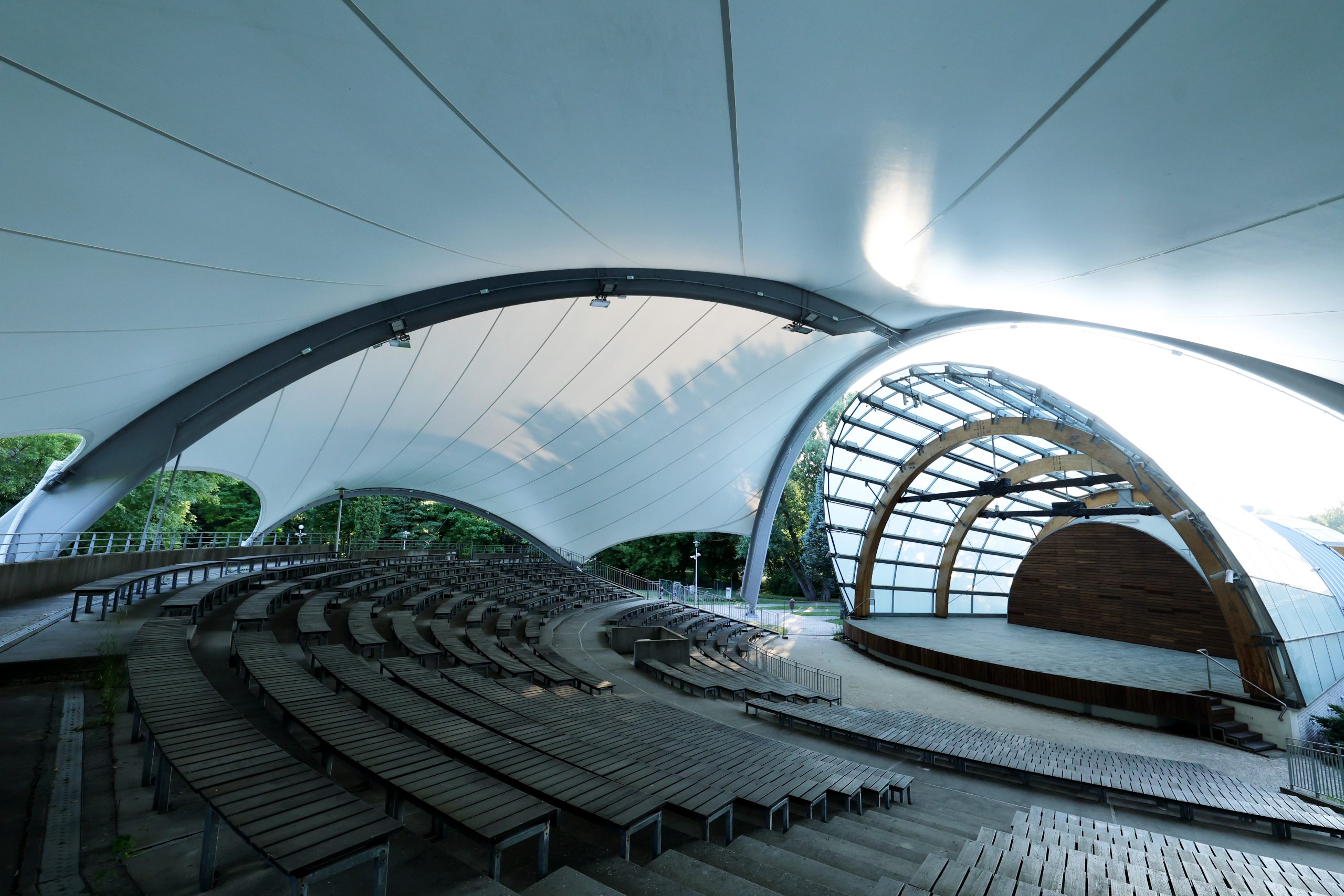
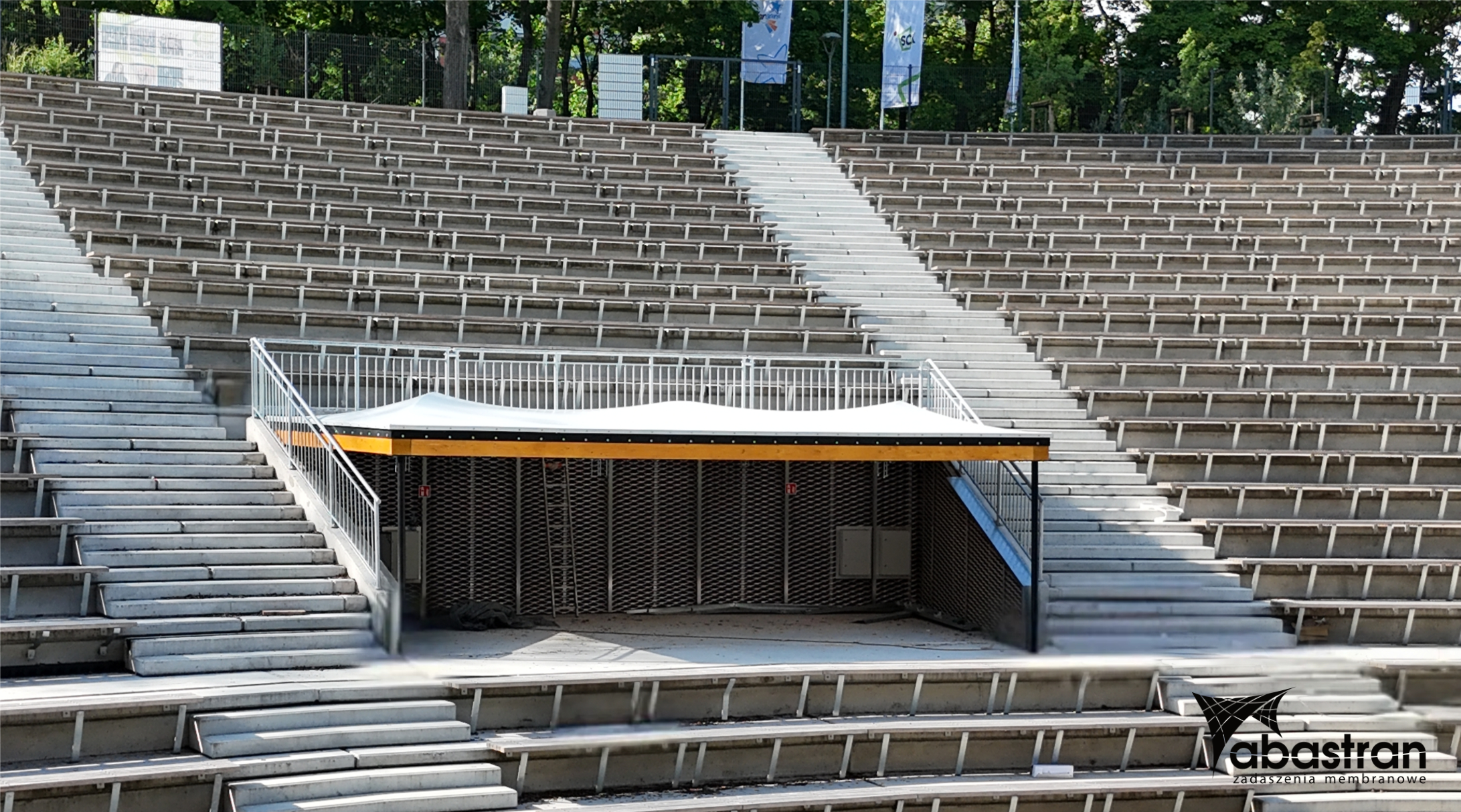
Membrane roofing systems are a true revolution in architecture. They utilize special, durable fabrics (PVC or PTFE) stretched over a lightweight supporting structure. Their biggest advantage? Exceptional lightness and the ability to create almost any fluid shape. Membranes transmit natural daylight excellently, which helps save on artificial lighting, and special coatings make them durable and self-cleaning. This is an ideal solution for stadiums, amphitheaters, or courts, giving facilities a modern look. However, remember that the design and installation of such structures require specialized knowledge – at Abastran, we have been specializing in creating even the most complex membrane and ETFE roofing systems for years.

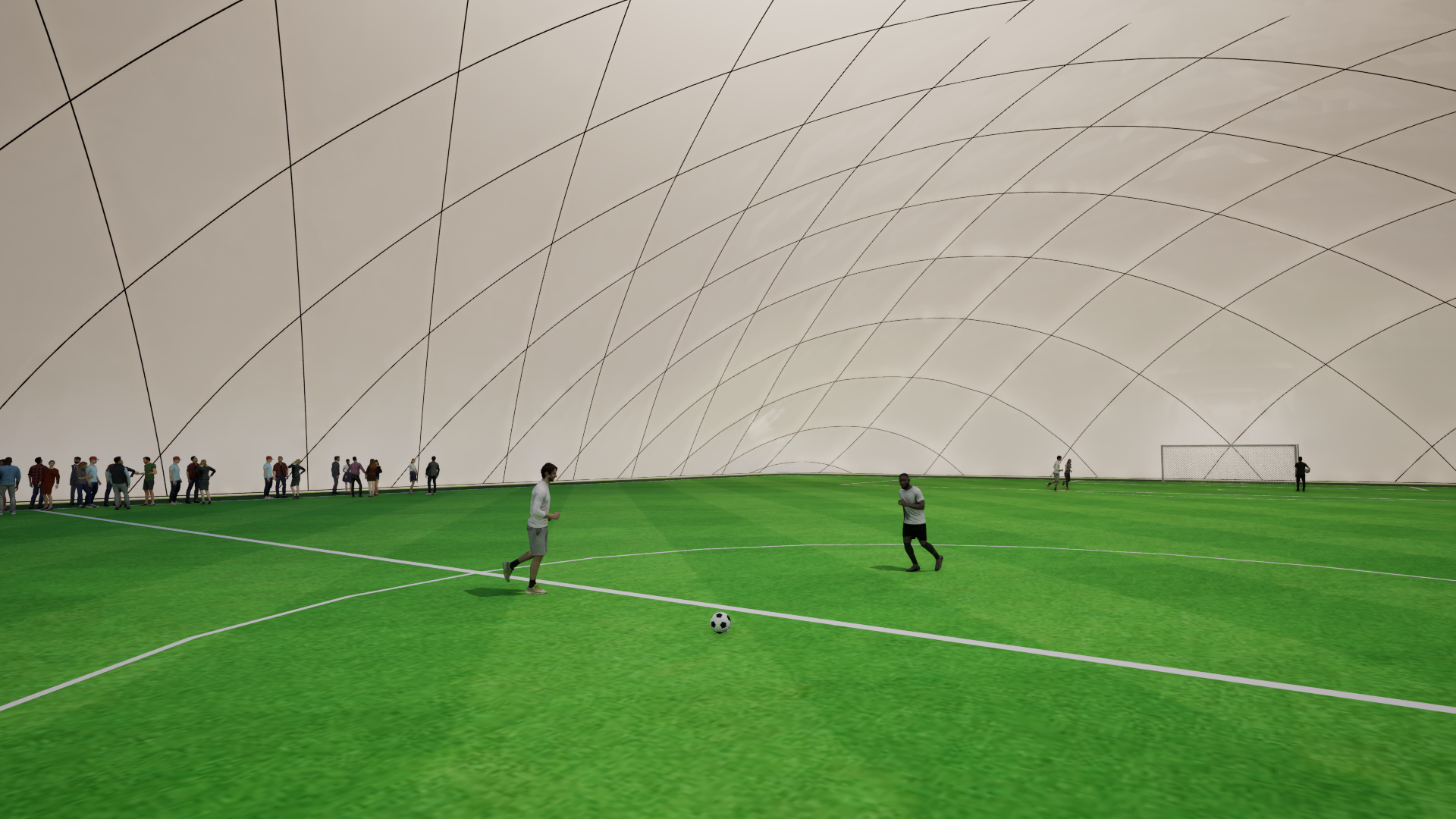
Inflatable halls, often called “domes” or “bubbles,” operate on a different principle. Here, the envelope is held up by internal air pressure. This solution is very cost-effective and incredibly fast to assemble. It works perfectly for covering fields, courts, or ice rinks seasonally or year-round. The main advantage is the possibility of quick setup and equally quick dismantling. However, you must account for the energy costs required to maintain the internal pressure and certain limitations in user comfort, especially in strong winds.

Flexible Solutions: Tent and Prefabricated Structures

Tent halls, typically based on a steel or aluminum frame covered with PVC fabric, are an excellent option for temporary or seasonal facilities. They are suitable as roofing for training pitches, warehouses, or event spaces. Their main advantages are speed of assembly and disassembly, relatively low cost, and ease of expansion. Modern tent halls can be used year-round, but their durability is generally less than that of permanent structures.

Prefabrication is a method involving the production of ready-made structural elements (e.g., concrete, steel) in a factory and assembling them on the construction site. This significantly shortens the investment time and ensures high, repeatable quality. Prefabricated elements are used in the construction of the roof, as well as stands or walls. This solution is particularly beneficial for standard hall designs. However, it may limit individuality and the freedom to shape unusual architectural forms.

Key Criteria for Choosing a Roofing Structure

Choosing a specific roofing technology is not an easy task. There is no single ideal solution for everyone. To make the best decision for your facility, you must carefully analyze several key factors. What is most important to you? What are the specific needs of your investment?

Consider the intended use of the facility, the available budget, and the time you have for implementation. Take into account local weather and ground conditions. Don’t forget about building regulations, safety standards, and any guidelines from sports federations. Only a comprehensive view of these aspects will allow you to choose a structure that will be a perfect fit: safe, durable, and economical.

What will the facility be used for?

The basic question is: what function will your sports facility serve? A football stadium roof has different requirements than a basketball hall, and still different ones than a swimming pool or court cover. Size, required height, access to light (natural or artificial?), acoustics, the need for integration with ventilation – all of this influences the choice of material and technology. For example:

  • Large stadiums: often require large spans without supports, favoring steel or membrane structures.
  • Swimming pools: resistance to moisture and corrosion is crucial, making aluminum or specially treated timber a good choice here.
  • Team sports halls: good acoustics and appropriate height may be important, which can be achieved using glued laminated timber or steel.

Also, remember the specifics of the particular sport discipline. Some require very stable conditions, others special lighting. If you plan a multi-functional facility, the roof structure must be versatile enough to meet various needs, for example, by allowing the suspension of heavy equipment.

What is your budget and schedule?

Costs and implementation time are often decisive factors. Different technologies have different material prices, assembly costs, and required construction time. Steel or timber structures may be more expensive upfront but offer great durability. Inflatable or tent halls, on the other hand, are cheaper and faster to build, which is a significant advantage when you have a limited budget or need to open the facility quickly.

However, remember that costs are not just about construction. Expenses for subsequent operation are equally important: maintenance, repairs, heating, lighting. Lightweight membranes can lower electricity bills by utilizing daylight. Good insulating materials, like timber, will reduce heating costs. Looking long-term, a more expensive solution initially may prove more cost-effective over years of use.

Where will the facility be built, and what are the weather conditions there?

The location of your investment is of great importance. You must consider the local climate, especially snow and wind loads. In areas with heavy snowfall, the roof must be strong enough to bear its weight. Where strong winds blow, structural stability is crucial. These factors can influence the choice of material (e.g., strong steel) or roof shape (e.g., aerodynamic membrane forms).

Don’t forget about ground conditions. Heavy structures require solid foundations, which can significantly increase investment costs on weak ground. In such situations, lightweight aluminum, membrane, or inflatable structures may be a better choice. Also, pay attention to the surroundings – proximity to other buildings or trees can affect wind load.

What are the regulations and safety standards?

Every sports facility must meet specific legal requirements. The roof design must comply with standards regarding loads (snow, wind), fire safety, and overall structural safety. Regardless of the chosen technology, the design must be carried out by authorized engineers, and the entire construction properly supervised and documented.

If you plan to host official competitions, you must also meet the requirements of specific sports federations (e.g., FIFA, FIVB). These may concern field dimensions, hall height, lighting, or even colors. Check these guidelines at the outset to avoid problems with obtaining facility approval in the future. If you are facing the challenge of choosing the best solution for your facility, contact us – Abastran experts will be happy to answer your questions and help you select the optimal technology.
Key Standards and Regulations for Temporary Event Structures

Dodatkowe treści

Key Standards and Regulations for Temporary Event Structures

Organizing a successful event is quite a challenge, isn’t it? You want everything to run smoothly, and guests to be safe and satisfied. Temporary structures like tents or stages play a crucial role here. They must not only be impressive but, above all, stable and compliant with regulations. This is especially true now, as new and updated standards are coming into force from 2025, directly impacting your responsibilities as an organizer or contractor.

Construction Regulations and Formalities – What You Need to Know in 2025

Let’s start with the formalities. The year 2025 brings updates to regulations concerning temporary structures. These changes are primarily aimed at increasing the safety of your event and streamlining procedures. Therefore, it’s crucial that you stay up-to-date with amendments to the Construction Law and related regulations, especially those concerning fire protection.

It remains key to distinguish whether your structure requires notification or a building permit. Generally, if you plan to use the structure for less than 180 days, a notification to the appropriate office (district office or city hall) is sufficient. However, structures with specific parameters or planned for longer periods may require a full building permit. Regardless of the procedure, you must prepare documentation. This usually includes:

  • Statement confirming the right to use the land.
  • Technical description of the structure and site plan.
  • Certificates and attestations confirming the quality of materials used.

Remember that the responsibility for completing the formalities rests with you, as the investor or contractor. Technical documentation from the structure’s manufacturer is invaluable here. Our advice: Always ensure you have complete and up-to-date documentation, compliant with 2025 regulations. Collaborating with an experienced supplier who knows their stuff will save you a lot of time and nerves. At Abastran, we understand these challenges well, which is why we offer support at every stage, helping you assemble the necessary documents.

Key Technical Standards for Your Structure

The safety of your guests is an absolute priority. That’s why technical standards have been developed to specify how temporary event structures should be designed and built. The most important one you need to remember is standard PN-EN 13782. It applies to tents with an area exceeding 50 m² and specifies detailed requirements for their stability, wind and snow resistance, and material quality.

In addition to PN-EN 13782, you should pay attention to Eurocodes. These are European structural design standards that specify how to calculate loads (wind, snow, suspended equipment) and design steel or aluminum components. Compliance with these standards guarantees that your structure is designed according to the highest engineering standards and can withstand the toughest conditions.

What does this mean in practice? Your structure must be stable and resistant to the natural forces present at the event location. It must bear not only its own weight but also wind pressure, snow load, and sometimes additional load from stage equipment. All materials, from profiles to membranes, must have attestations and certificates confirming their quality. Our advice: Always demand full design documentation from the supplier, including static calculations (compliant with PN-EN 13782 and Eurocodes) and certificates for key components. This is the basis for a safe event. We ensure that all structures designed and produced at Abastran meet these stringent standards, providing you with a safe product and complete documentation.

Fire Safety – New Regulations You Must Know

Fire safety is extremely important, especially in temporary structures where people gather. Regulations in this area are becoming increasingly stringent, and from 2025, you can expect further tightening, for example, resulting from amendments to the Ministry of Interior and Administration Regulation on Fire Protection. Your task is to ensure safe evacuation conditions and minimize the risk of fire.

You must ensure an adequate number of evacuation exits, clear signage, and constant accessibility. The width of evacuation routes must be adapted to the number of participants at your event. Depending on the event’s scale, it may be necessary to install an alarm system or a voice alarm system, and of course, an appropriate number of working fire extinguishers.

Pay particular attention to the materials from which the structure is built, especially covers and finishing elements. They must have certificates confirming their low flammability (appropriate reaction to fire class). Cooperation with a fire safety expert is often essential. They will assess your project, indicate necessary safety measures, and help obtain the required opinions. Our advice: Consult with a fire safety expert already at the planning stage. This way, you will avoid costly rework and be sure that you meet the latest legal requirements.

If you have additional questions about standards, need support in choosing the right structure, or want to discuss your project, please contact us. The Abastran team will be happy to share their knowledge and experience.

Pneumatic Tents in Special Applications – Rescue, Medicine, Military

Dodatkowe treści

Pneumatic Tents in Special Applications – Rescue, Medicine, Military

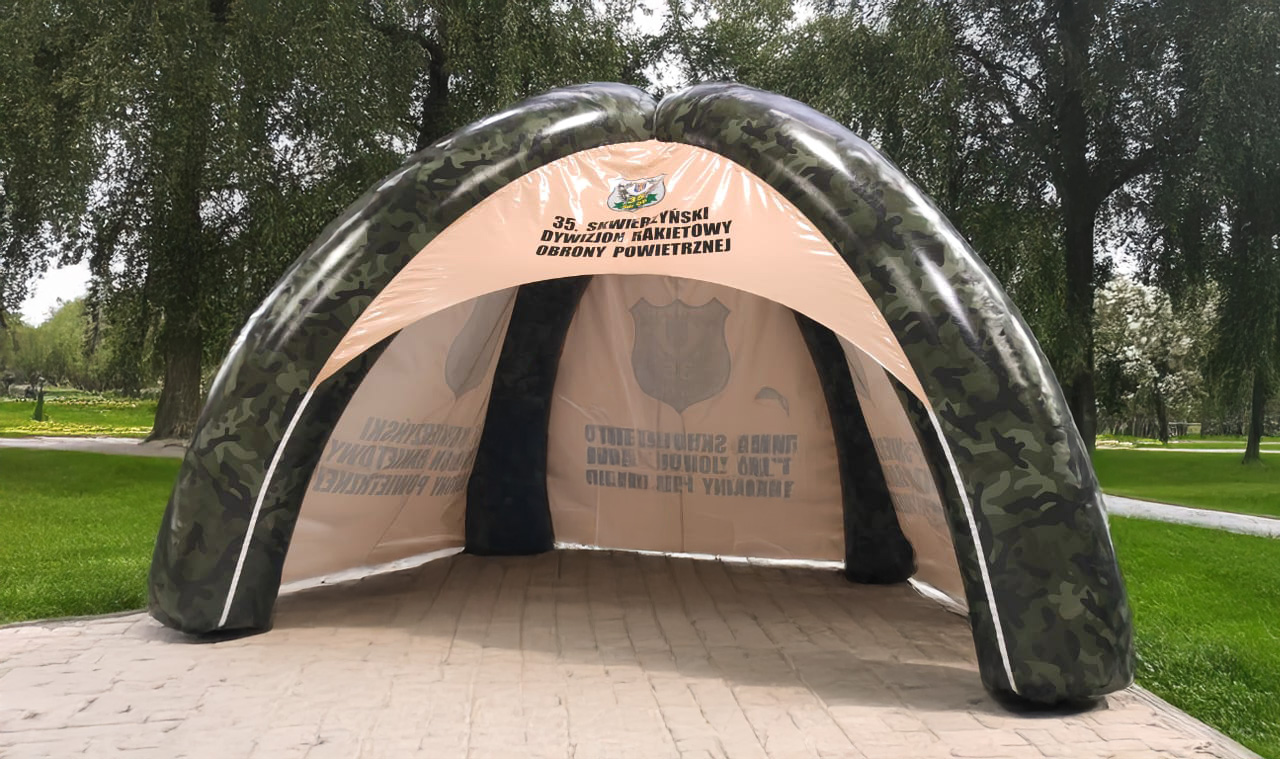
Imagine a crisis situation, a dynamic rescue operation, or a demanding field mission. In such moments, every second counts, and reliable equipment becomes crucial for the success of the mission and the safety of people. This is precisely why more and more special services, from fire brigades and medical teams to military units, are opting for modern pneumatic tents. This innovative solution, which we offer at Abastran, combines speed, mobility, and durability, becoming indispensable support where traditional structures fall short.

What sets pneumatic tents apart?

The secret of pneumatic tents lies in their unique construction. Instead of a heavy, metal frame, they use a system of durable, airtight tubes filled with air. Once inflated, which usually takes from a few dozen seconds to a few minutes using a pump or cylinder, the tubes form a solid, self-supporting frame. This solution makes setting up even a large tent extremely fast and simple, and importantly, does not require the use of specialized tools or a large crew.

The pneumatic frame is covered with a skin made of the highest quality technical materials, most often reinforced polyester coated with PVC layers. This guarantees not only water resistance and protection against wind or sun but also high resistance to mechanical damage and ease of cleaning. At Abastran, we place great importance on the quality of these materials, leveraging our experience in the production of membrane structures and pneumatic structures. Crucially, modern pneumatic frames are airtight, meaning that once inflated, the tent maintains stability for a long time without the need for continuous air supply. This combination of speed, simplicity, and reliability makes pneumatic tents an ideal solution when time and certainty of action are critical.

Indispensable Support: Pneumatic Tents in Action

The versatility of pneumatic tents allows for their effective use in various, often extreme situations faced by rescue, medical, and military services. Their mobility and speed of deployment open up new possibilities for organizing operations directly at the scene of the incident.

Rescue: Quick Response at the Heart of Events

For rescue teams, such as fire brigades or search groups, a pneumatic tent is a mobile operational center set up in the blink of an eye. It can serve as a first aid point, temporary shelter for evacuated persons, an action coordination headquarters, or even an organized technical support facility. Imagine a large fire or mass casualty incident, where the ability to quickly create a protected space for rescuers to work and rest is invaluable.

Thanks to pneumatic tents, aid arrives faster and is better organized. Proximity to the incident site, stable working conditions regardless of the weather, and the possibility of flexibly combining modules into larger complexes significantly increase the effectiveness of rescue operations. This is real support that allows focus on saving lives and property.

Medicine: Mobile Hospitals and Aid Points

In disaster medicine and crisis situations, pneumatic tents become the foundation of temporary medical infrastructure. We use them to build field hospitals, triage points for the injured, isolation zones for patients with suspected infectious diseases, or decontamination chambers. Their role is invaluable during epidemics, natural disasters, or accidents with a large number of casualties, when an immediate increase in the capacity to admit and treat patients is needed.

Special internal materials, easy to clean and disinfect, help maintain high hygiene standards. The ability to divide the interior with curtains and install specialized medical equipment allows for the creation of a functional and safe working environment for medical personnel. Pneumatic tents provide the flexibility and speed of response that are crucial for saving health and lives in field conditions.

Military: Reliable Support in All Conditions

Armed forces value pneumatic tents for their mobility, durability, and versatility in a dynamic operational environment. They serve as command posts, communication centers, warehouses, workshops, checkpoints, or comfortable quarters for soldiers. The ability to quickly set up and dismantle a tent allows for efficient base relocation and adaptation of infrastructure to changing tactical needs.

Tents designed for military use often have additional features such as special camouflage coatings or increased resistance to extreme weather and terrain conditions. They meet rigorous durability and safety standards. The ability to connect tents into large, integrated complexes allows for the creation of fully functional field bases, providing necessary logistical and operational support for soldiers on any mission.

Why Choose Pneumatic Tents from Abastran?

In summary, pneumatic tents are an investment in speed, mobility, and reliability – characteristics absolutely crucial in rescue, medical, and military operations. They offer significantly greater flexibility and ease of use than traditional structures, allowing for immediate response and effective work organization even in the most demanding conditions. Their versatility and adaptability mean that one tent can serve many different purposes.

By choosing pneumatic tents from Abastran, you gain not only a top-quality product but also the support of a team of experienced engineers and production specialists. We are ready to face any design challenge to deliver a solution perfectly tailored to your needs. Contact us to discuss the details and learn more about the possibilities offered by modern pneumatic structures. Opt for proven technologies and a partner who will ensure the safety and effectiveness of your operations.

How Do Membrane Structures Affect Sound?

Dodatkowe treści

How Do Membrane Structures Affect Sound?

You’ve probably noticed how membrane structures are transforming the face of modern architecture. Their lightness, fluid lines, and almost unlimited potential for shaping space inspire architects and investors worldwide. When building amphitheatres, performance halls, or covering city squares, we choose membranes not only for their aesthetics or protective function. It turns out that these modern materials can actively shape the acoustics of a space, which is crucial for comfortable event reception. After all, excellent sound is the foundation of a successful concert, spectacle, or even a public speech.

What are Membrane Structures?

Simply put, membrane structures are technologically advanced coverings whose main element is a special fabric or film, tensioned over a supporting structure. Imagine a sail – the principle is similar. Proper tension and giving the membrane a characteristic, double-curved shape (resembling a saddle) make it stable and capable of bearing loads such as wind or snow. This allows us to create lightweight yet durable membrane canopies with impressive spans.

The key to success is selecting the right material. In our projects, we most often use three basic types of membranes:

  • PVC (polyvinyl chloride): A popular and versatile material offering a good quality-to-price ratio. It’s flexible and available in a wide range of colors.
  • PTFE (polytetrafluoroethylene, or Teflon): Glass fiber fabrics coated with PTFE are characterized by exceptional durability, resistance to dirt (they are practically self-cleaning), and UV radiation. This is a long-term solution.
  • ETFE (ethylene-tetrafluoroethylene): This is a transparent film, extremely light and resistant. It allows for the creation of “glass” roofs without the weight and fragility of traditional glass, letting in plenty of natural light.

Material selection isn’t just a matter of aesthetics, durability, or budget. Each of these materials interacts differently with sound. At Abastran, we have extensive experience working with each of them, choosing the optimal solution for the specific project and client’s expectations, including acoustics. The goal is for the final structure to be not only beautiful and functional but also to provide optimal acoustic comfort.

How Do Membranes Affect Sound in Amphitheatres?

Due to their lightness and specific construction, membrane structures interact with sound waves differently than heavy, traditional materials. They can reflect sound, partially absorb it, or transmit it, and the final effect depends on many factors:

  • Type of membrane
  • Its tension
  • Shape of the entire structure (the most important factor)

This is precisely why designing acoustics in membrane-covered facilities requires special attention, especially in places like amphitheatres, where sound clarity and intelligibility are a priority.

Canopy geometry is of fundamental importance here. We must be careful with concave shapes, which can act like a lens, focusing sound in one spot and creating an unpleasant echo or uneven sound reinforcement for the audience. The most important aspects of geometry:

  • We prefer forms with double anticlastic curvature (saddle shape)
  • Such forms naturally disperse sound waves
  • They provide more even sound throughout the space

By appropriately modeling the shape of the membrane, we can even subtly amplify sound and direct it towards the audience, improving audibility without excessive use of loudspeakers.

Another important aspect is reverb control. Too long a reverb time causes sounds to overlap, and speech becomes unintelligible. Membranes themselves are not strongly sound-absorbent materials, especially for low frequencies. However, by using appropriate solutions, we can effectively manage reverb:

  • Perforated membranes
  • Multi-layer systems with additional acoustic insulation
  • Appropriate spatial shaping

Designing acoustics under a membrane is a complex process. Therefore, we always recommend:

  • Using advanced computer simulations
  • Close collaboration with an experienced acoustician
  • Conscious decision-making regarding materials and form

This allows us to minimize the risk of problems and create facilities with truly good acoustics.

Do Membranes Protect Against Noise? About Acoustic Insulation

When we think about acoustic comfort, not only the sound quality inside the facility is important, but also protection from external noise and limiting sound escaping to the outside. Can lightweight membrane structures provide adequate acoustic insulation? The answer is yes, but it requires the use of appropriate solutions.

A single membrane layer, due to its low mass, has limited sound attenuation capabilities, especially for low frequencies. Significantly better results are achieved by using multi-layer systems:

  • Two or three membrane layers separated by an air gap
  • The gap filled with sound-absorbing material (e.g., special wool)
  • Specialist acoustic membranes with a perforated structure

However, remember that even the best materials won’t work if the structure isn’t airtight. Potential problems:

  • Leaks at the connections between the membrane and the supporting structure
  • Installation penetration points
  • Lack of mounting precision

Therefore, we attach great importance to mounting precision and the use of dedicated sealing systems. Only in this way can we guarantee that the entire membrane barrier will act as an effective acoustic barrier.

Remember that every project is different. There are no ready-made recipes for ideal acoustics under a membrane. The key is an individual approach, flexibility, and openness to innovation. At Abastran, we combine our engineering knowledge with experience in realizing complex membrane projects, always prioritizing the client’s needs and the quality of the final result. If you are considering using a membrane structure in your project and excellent acoustics are important to you, we invite you to consult with us – our experts will help you find the best solution.

Fire Resistance of Membrane Structures (PVC, PTFE, ETFE)

Dodatkowe treści

Fire Resistance of Membrane Structures (PVC, PTFE, ETFE)

You’ve probably noticed how membrane structures are increasingly making their way into the world of modern architecture. Their lightness, flexibility, and unique appearance make them a popular choice for designing stadium roofs, amphitheaters, and building facades. We use advanced materials like PVC, PTFE, and ETFE for this purpose. However, with their growing popularity, a crucial question arises: how do we ensure the fire safety of such structures? As specialists in this field, we want to share our knowledge with you so you can make informed and safe design decisions.

Get to Know Membrane Materials: PVC, PTFE, and ETFE in Terms of Fire

Choosing the right membrane is fundamental. It determines not only the appearance and durability of the structure but also has a direct impact on its behavior during a fire. Let’s look at the three most popular players on the market: PVC, PTFE, and ETFE. Each has unique characteristics that determine how it will react to contact with fire and high temperatures. At Abastran, we work with these materials daily, designing and executing membrane and ETFE structures, so we know their specifics well.

PVC membranes are a frequently chosen, economical solution. We value them for their good strength and ease of welding, which allows us to create tight joints. In terms of fire safety, PVC is classified as a flame-retardant material (usually class B-s1, d0). This means that it stops burning on its own after the source of ignition is removed. However, you must remember that at high temperatures, it can release toxic gases, which is a significant risk factor.

PTFE membranes, on the other hand, which are popular Teflon applied to a fiberglass mesh, are in a completely different league. They are extremely durable, resistant to sun and chemicals, and self-cleaning. Most importantly from a fire perspective, PTFE is a non-combustible material (class A2-s1, d0). It does not melt or form burning droplets, significantly increasing the level of safety. ETFE films, used primarily in the form of lightweight cushions, are striking due to their transparency. Like PVC, they are flame-retardant (class B-s1, d0). In fire, they melt, creating openings, which can help with smoke ventilation, but also carries the risk of hot material dripping.

Fire Resistance in Regulations: Standards and Classes You Need to Know

To assess how a given membrane structure will behave in a fire, we use European standards, which also apply in Poland. The key document here is the PN-EN 13501-2 standard. It specifies how we classify building elements in terms of fire resistance. This classification is expressed using letters and numbers, and the most important for you will be three letters: R (load-bearing capacity), E (integrity), and I (insulation).

  • R (Load-bearing capacity): Indicates how long a structural element (e.g., a membrane roof on a steel frame) will maintain its shape and strength under load during a fire, without collapsing.
  • E (Integrity): Defines the ability of a barrier to prevent fire and hot gases from passing through to the other, safe side.
  • I (Insulation): Indicates how well an element protects against excessive temperature rise on the side not affected by the fire. The goal is to prevent the ignition of other materials or danger to people.

The time given next to these letters (e.g., RE 30, REI 60) indicates for how many minutes the given property is maintained during a standard fire test. Depending on whether you are designing a roof or a wall, the requirements for R, E, and I may vary. Detailed test methods for specific applications can be found in standards such as EN 1365-2 (for roofs) or EN 13381-1 (for fire protection). Remember that interpreting these markings and selecting the appropriate class is key to a safe design.

How to Read Fire Resistance Certificates?

A fire resistance certificate is an important document, but you need to know how to read it. They are issued by specialized laboratories, such as the Building Research Institute (ITB). You will find the exact fire resistance class (e.g., REI 60) in it, but pay attention to the details. This class applies to a specific, tested system: the type of membrane, insulation type, supporting structure, and installation method.

The most important rule: do not assume that a certificate obtained for one system automatically applies to another, even if the differences seem minor. A change in insulation thickness or membrane fastening method can completely alter its behavior in fire. Therefore, always ensure that your design solution is identical to the one described in the certificate. Also, check the validity date of the document, as standards and technologies change. If you have doubts about interpreting documentation or selecting the right system for your project, contact us – the Abastran team will be happy to share their knowledge.

Membrane Comparison – PVC vs PTFE vs ETFE

Which membrane is the safest in terms of fire? A direct comparison shows clear differences. The undisputed leader is the PTFE membrane on a fiberglass carrier. It is non-combustible (class A2-s1, d0), meaning it practically does not participate in a fire. It does not melt, drip, or support combustion. This is the best choice if passive safety is the top priority, for example, in public buildings with high traffic.

PVC membranes and ETFE films belong to flame-retardant materials (usually class B-s1, d0). This means they burn with difficulty, produce little smoke, and do not form burning droplets in standard tests. However, their behavior in fire is different from PTFE. PVC softens and melts, and worse, can release toxic hydrogen chloride. ETFE also melts, creating openings, which can help with smoke ventilation, but poses a risk of hot plastic dripping. When choosing between PVC and ETFE, you must consider the project specifics, potential effects (smoke, toxicity, dripping), and the fire resistance requirements of the entire barrier.

Membranes in Action: Examples and Practical Conclusions

How do membranes perform in real-life situations? Let’s look at a few examples. In large stadiums or concert halls, you often see roofs made of PTFE membrane. Why? Because it’s non-combustible. Even if a fire breaks out beneath it, the membrane itself will not become additional fuel. This is crucial for the safety of thousands of people during evacuation.

ETFE films on roofs or facades have an interesting property: they melt, creating openings. Designers sometimes use this as part of a smoke ventilation system, allowing smoke and hot air to escape. However, the risk of dripping molten plastic must be considered, and evacuation routes should be adequately protected. PVC membranes, although flame-retardant, can release toxic smoke in an intense fire. Therefore, in facilities with special safety requirements, their use may be limited or require additional safeguards. Each case is different and requires an individual risk analysis.

Let’s remember that the reaction to fire classification of the material itself is not everything – the key is the fire resistance of the entire building element (R/E/I), considering the cooperation of the membrane with the supporting structure and potential insulation. Investing in certified, proven solutions and cooperating with experienced designers and contractors specializing in membrane technologies is the best guarantee of creating a structure that is not only modern and functional but above all, safe for its users.

If you are facing a design challenge related to membrane, steel, or ETFE structures, we invite you to contact Abastran – together we will find the optimal and safe solution. Regular monitoring of the technical condition of the structure allows its properties to be maintained for many years.

How to Maintain a Membrane Roof So It Lasts for Years?

Dodatkowe treści

How to Maintain a Membrane Roof So It Lasts for Years?

You’ve probably noticed how membrane roofing systems are changing the face of modern architecture. Their lightness, elegance, and almost unlimited possibilities for shaping space mean we see them increasingly often over stadiums, sports halls, amphitheatres, and shopping centers. They are not just functional coverings but true architectural works of art. However, to fully enjoy their benefits, you must remember one key aspect: regular and professional maintenance. It is this that guarantees the safety, durability, and impeccable appearance of your investment for many years.

What is a Membrane Roof?

Simply put, a membrane roof is a structure where the main role is played by a specialized, tensioned technical fabric. It forms the roof and transfers loads. We most often use proven materials such as polyester-reinforced PVC, extremely durable PTFE based on glass fiber, or innovative ETFE film, often in the form of air-filled cushions. Each has its unique advantages. PVC is a great compromise between price and quality, PTFE impresses with durability and ease of cleaning (often having self-cleaning properties), and ETFE provides amazing visual effects thanks to its transparency and lightness.

Why are these structures so popular? Primarily due to their low weight, immense tensile strength, and flexibility, which allows architects to create truly spectacular forms. Add to this high resistance to weather conditions. Therefore, they are ideal for covering large spaces: stadiums, halls, amphitheatres, stations, or shopping centers. But they also look great on a smaller scale, covering terraces or building entrances. They lend buildings lightness, modernity, and prestige.

Maintenance is Key – Why is it So Important?

Regular, professional maintenance of your membrane roof is an absolute necessity. It’s not a whim but the key to ensuring its longevity, safety, and aesthetics. Through systematic inspections, you can detect minor problems early, such as small damages, leaks, or the first signs of dirt, before they turn into a serious failure and generate significant costs. Professional maintenance minimizes the risk of material degradation due to sun, rain, or pollution, protecting the integrity of the entire structure.

Neglecting this can have unpleasant consequences. Dirt and moisture promote the growth of algae or fungi, which not only disfigure the membrane but can also damage it. Undetected cracks or abrasions lead to leaks, and in extreme cases, even to the weakening of the supporting structure due to accumulating water or ice. Ignoring service recommendations shortens the membrane’s lifespan and increases the risk of failure, which can endanger people’s safety. Therefore, treat maintenance as an investment in peace of mind and the protection of your property.

How to Organize Technical Inspections and Service?

Regular technical inspections are the basis for effective maintenance. They allow for a professional assessment of the roof’s condition and planning necessary actions. We recommend conducting a full inspection at least once a year. It is also advisable to commission an additional inspection after any violent storm, heavy snowfall, or hailstorm. Such systematic approach allows for continuous monitoring of the membrane’s condition and prompt reaction to potential problems.

What does a professional inspection include? First and foremost, a thorough assessment of the membrane itself: we look for mechanical damage (abrasions, cracks), check the condition of seams, evaluate the degree of soiling, and look for signs of material aging. Then, we inspect all elements securing the membrane to the structure: ropes, bolts, profiles – we check their completeness, condition, and proper tension. The supporting structure and water drainage systems are also assessed. Cooperation with a specialized service company, possessing appropriate experience and facilities, guarantees that nothing will be overlooked.

Cleaning and Care of the Membrane – How to Do It Right?

Regular cleaning is not only a matter of aesthetics but also an important element of care that prevents permanent staining and the growth of microorganisms. So, how to safely clean the membrane? Use only mild cleaning agents with a neutral pH, preferably those recommended by the manufacturer, diluted in water. Hand washing with a soft brush, sponge, or microfiber cloth works best. Absolutely avoid pressure washers from close distances or under too high pressure, as they can damage the delicate coating.

How often should you clean? This depends on the location of the facility and the type of membrane, but generally, we recommend thorough cleaning once or twice a year. In case of heavy soiling, such as bird droppings, remove them as soon as possible to prevent permanent discoloration. Remember: never use aggressive chemicals (solvents, bleaches), hard brushes, or sharp tools! They can irreversibly damage the membrane. If you are unsure how to proceed, it’s better to entrust the cleaning to a professional company.

What to Avoid? The Most Common Mistakes in Use and Maintenance

Even with the best intentions, mistakes happen during operation and maintenance that can shorten the life of your roofing. It’s worth knowing them to avoid them. The most common include:

  • Mechanical damage: Be careful with sharp objects near the membrane, both during daily use and maintenance work. Never remove snow or ice with sharp tools (e.g., metal shovels).
  • Improper cleaning: Using aggressive chemicals or hard brushes is a direct way to destroy the membrane’s protective layer.
  • Neglecting inspections: Skipping regular inspections prevents early detection of problems that can become serious and costly to repair over time.
  • Ignoring recommendations: The manufacturer and designer know best how to care for a specific structure. Disregarding their instructions can lead to loss of warranty and shortened roof lifespan.

Awareness of these potential pitfalls and adherence to proper operating principles will help you avoid many problems and enjoy your roof for many years.

Remember that caring for a membrane roof is not an unpleasant duty but a conscious action to protect your investment and ensure the safety of users. Regular maintenance, carried out by professionals or according to their recommendations, will allow you to enjoy all the advantages of this modern solution for a long time. Cooperation with experienced service technicians and maintaining documentation is the foundation of effective management. If you have any questions about the maintenance of your roof, need professional advice, or are looking for a trusted partner for its service or modernization, feel free to contact the experts at Abastran. We will be happy to share our knowledge and experience. Thanks to this, your roof will not only be functional and safe but will become a true showcase of the facility.