

Logo UE
Logo Abastran

Advantages of Cutting Membranes with a CNC Plotter

Advantages of Cutting Membranes with a CNC Plotter


Introduction

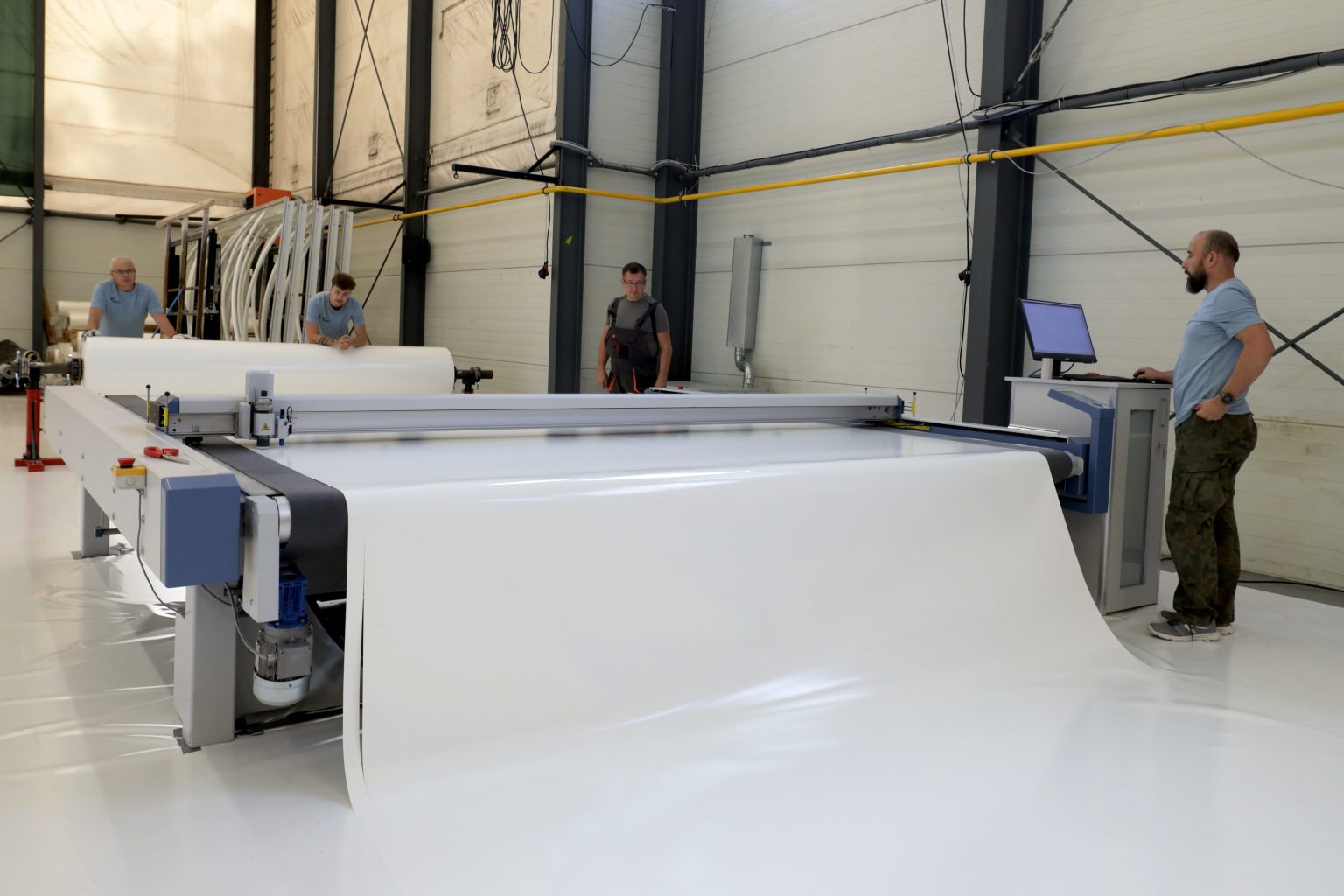
Cutting membranes with a CNC plotter is becoming increasingly popular in various industries. Thanks to precise technology, it offers many benefits that make it a preferred method of material processing. In this article, we will discuss the main advantages of cutting membranes with a CNC plotter, focusing on its accuracy, efficiency, time and cost savings, and the ability to automate production processes.


Precise Material Processing

One of the biggest advantages of cutting membranes with a CNC plotter is unmatched precision. Thanks to advanced computer technology, CNC plotters can perform cuts with an accuracy of up to hundredths of a millimeter. This allows for the creation of complex patterns and details that would be impossible to achieve with traditional cutting methods.


Efficiency and Time Savings

Cutting membranes with a CNC plotter is much faster compared to conventional methods. The automation of processes allows the device to work continuously, minimizing production downtime. This makes it possible to achieve high efficiency, which translates into shorter order fulfillment times. Faster production also means quicker product launches, which is crucial in a competitive business environment.


Cost Savings

Investing in a CNC plotter may initially seem expensive, but long-term savings are significant. Thanks to automation and precision, the amount of material waste is reduced. Less material consumption means lower production costs. Additionally, CNC plotters require less human labor, which reduces employment costs. All of this makes cutting membranes with a CNC plotter more cost-effective.


Automated Production Processes

CNC plotters enable full automation of production processes. With computer software, it is possible to program the device to perform repetitive tasks without supervision. This not only increases efficiency but also eliminates the risk of human error. Automation also allows for easy adjustment of processes to changing production needs.


Flexibility and Versatility

CNC plotters are extremely versatile. They can be used to cut various materials such as plastic, rubber, textiles, and even metal. This flexibility allows for wide application in different industries, from automotive to electronics. The ability to adjust cutting parameters to specific material requirements makes CNC plotters indispensable in modern production.


High Quality and Repeatability

One of the key requirements in production is consistent quality of products. CNC plotters guarantee high cutting quality, regardless of the production volume. This ensures that each produced batch is identical, which is extremely important in mass production. The repeatability and precision of cutting eliminate the need for additional processing, which speeds up the entire production process.


Work Safety

Using CNC plotters increases work safety. Automation and closed operating systems minimize the risk of accidents associated with manual material cutting. CNC plotter operators do not need to intervene directly in the cutting process, which significantly reduces the risk of injury.


Conclusion

Cutting membranes with a CNC plotter is the future of modern production. Its advantages, such as precision, efficiency, time and cost savings, process automation, flexibility, high quality, and safety, make it an indispensable technology in many industries. Investing in a CNC plotter is a step towards increasing competitiveness and production efficiency.


Check out our membrane cutting services: CNC Plotter Cutting Service


Contact us to learn more about our services and start a collaboration. We are happy to answer any questions and advise on the best options.
PVC Welding Using HF Technology

High Frequency (HF) Welding of PVC


Introduction to HF Welding Technology for PVC

High Frequency (HF) welding technology for PVC has gained popularity due to its efficiency and reliability. In this article, we will discuss in detail what HF welding involves, its advantages, applications, and why it is worth choosing this method for various PVC-related projects.


What is HF Welding for PVC?

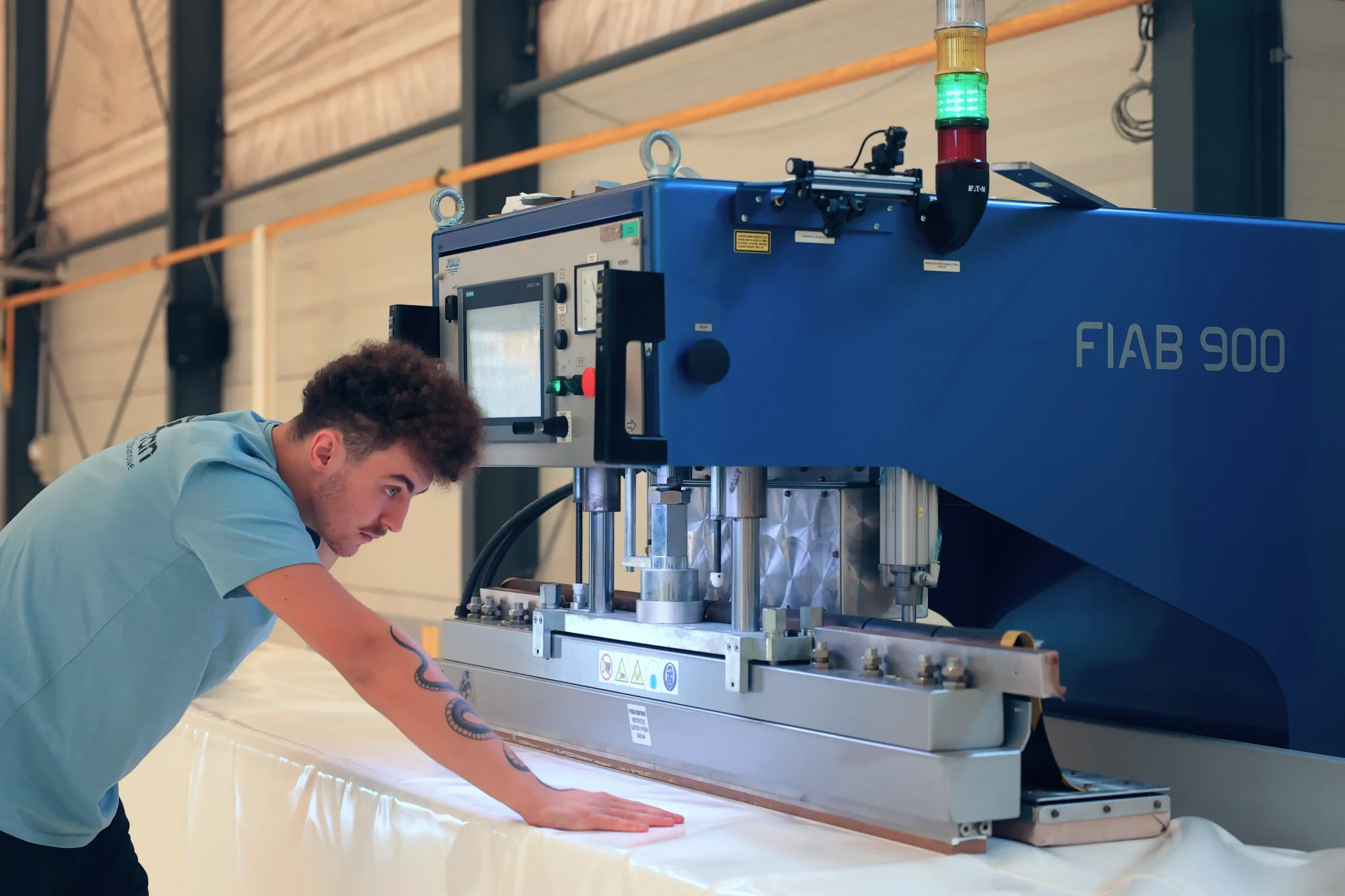
High Frequency welding is a process where high-frequency radio waves (typically 27.12 MHz) are used to join plastic materials such as PVC. This method utilizes an electromagnetic field that generates heat inside the material, causing it to melt and form strong, durable connections.


Advantages of HF Welding Compared to Other Methods


  1. High Precision and Control: HF welding allows precise control of process parameters, resulting in high quality and uniformity of joints.
  2. Speed and Efficiency: The process is very fast, increasing production efficiency and reducing costs.
  3. Durability of Joints: HF welding ensures strong and durable connections resistant to various external factors such as moisture, chemicals, and temperature fluctuations.
  4. No Need for Additional Materials: Unlike other methods such as adhesive bonding, HF welding does not require additional connecting materials, simplifying the production process.


Applications of HF Welding Technology

HF welding technology is widely used in various industries. Here are some examples:

  1. Medical Products: Used in the production of blood bags, infusion fluid containers, and other medical products requiring high purity and durability of joints.
  2. Automotive Industry: In automotive applications, HF welding is used to join various interior components such as upholstery, covers, and other PVC elements.
  3. Packaging and Advertising: In the packaging sector, HF welding is used to produce various types of plastic packaging such as bags, films, and advertising elements.
  4. Textile Industry: HF welding is also used in the textile industry for manufacturing protective clothing, tents, tarpaulins, and other products requiring robust joints.


Process of HF Welding for PVC


Material Preparation

Before starting the welding process, materials must be properly prepared. PVC surfaces are cleaned and prepared to ensure the best possible connection.


Setting Machine Parameters

HF welding machines are set according to material specifications and project requirements. Key parameters include frequency, power, welding time, and pressure.


Welding Process

Materials are placed between the electrodes of the HF welding machine. Under the influence of the electromagnetic field, PVC molecules begin to vibrate, generating heat that melts the material and forms a connection.


Cooling and Quality Control

After completing the welding process, joints are cooled and then subjected to quality control to ensure they meet all technical and strength requirements.


Why Choose HF Welding?

HF welding of PVC using this technology is the ideal choice for companies seeking reliable and durable connections in their products. Due to its efficiency and versatility, this method finds application in many industries and is one of the most popular solutions in the field of plastic processing.


Summary

HF welding technology for PVC offers many benefits, making it one of the best methods for joining plastic materials. Its advantages such as high precision, speed, durability of joints, and wide range of applications make it indispensable in many industries.

Explore our offering for HF welding of PVC: HF Welding of PVC

Contact us to learn more about our services and start a collaboration. We are happy to answer any questions and advise on the best options.