
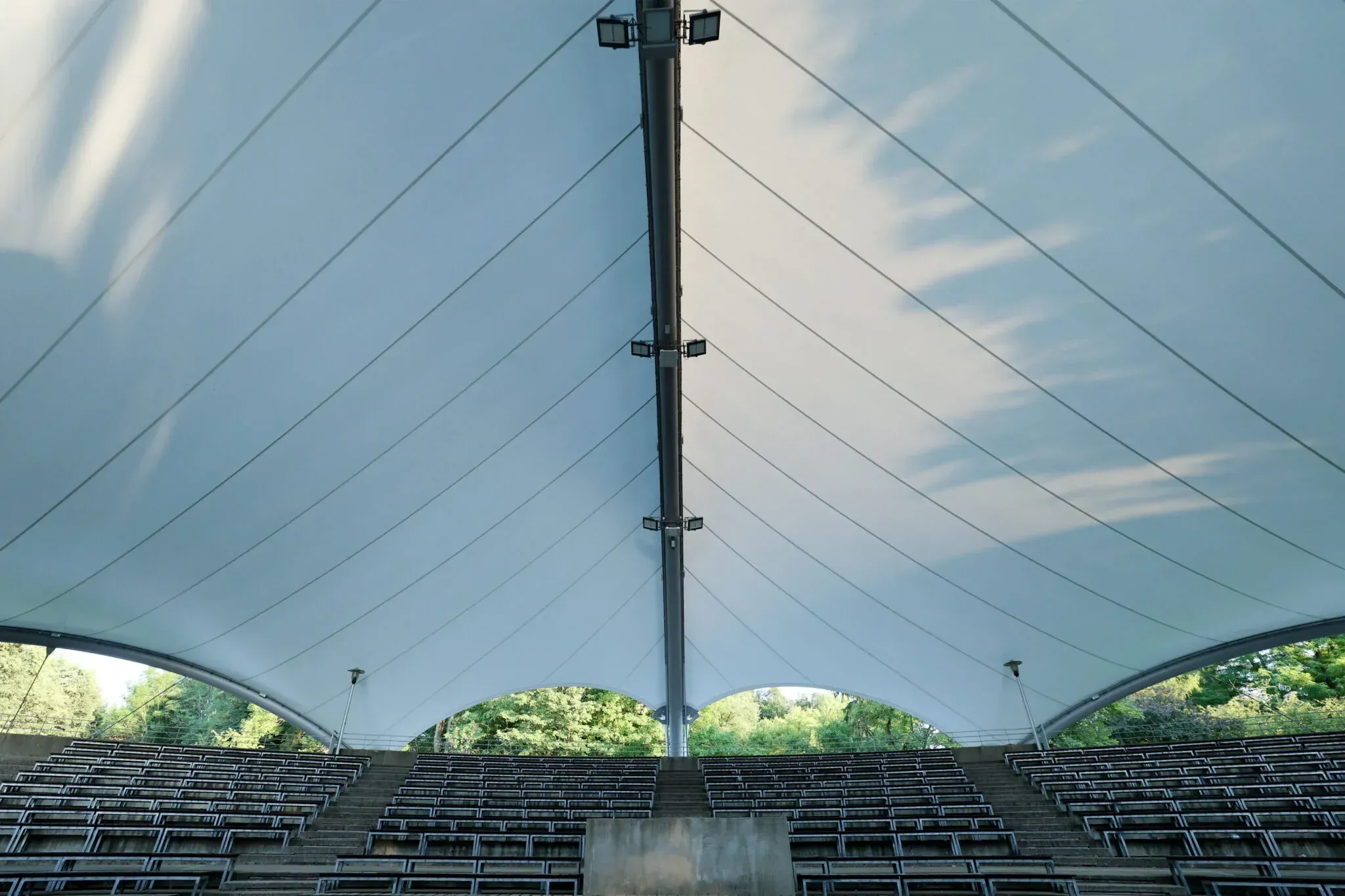
The fabric on a tent hall cover is the single biggest factor in how the structure performs. It determines durability, weather resistance and long-term appearance, which is why the choice deserves serious thought. Modern fabric covers come in several distinct categories, each with characteristic strengths and trade-offs. This guide walks through the main options and shows how to pick the right one.
Main fabric categories
Polyester
Polyester is one of the most common base fabrics for tent halls because of its excellent balance between durability and cost. It is strong, lightweight, and offers reasonable water resistance even before any coating is applied. Polyester comes in several weave types, including Oxford and ripstop, which improve tear resistance. It can be coated with PVC and other polymers to dramatically improve performance, and it works well across a wide range of applications from short-term to long-term installations.
- Strength and durability — polyester resists wear and tear well, making it suitable for long-term use
- Water resistance — polyester is naturally water-resistant; coatings improve this further
- Versatility — available in many weaves and coatings, fitting a wide range of applications
PVC-coated polyester
PVC-coated polyester takes the durability of plain polyester one step further by adding a layer of polyvinyl chloride. The result is a fabric that is significantly more waterproof, UV-resistant and fire-retardant than uncoated polyester. It is the default material for tent halls that need to handle real weather and meet fire safety requirements.
- Enhanced water resistance — the PVC coating ensures the fabric handles heavy rain reliably without leaks
- UV resistance — protects the fabric from harmful UV radiation, extending its life significantly
- Fire retardance — many PVC-coated fabrics meet the relevant fire safety standards, making them suitable for public-use venues and industrial applications
For permanent or semi-permanent tent hall covers, PVC-coated polyester is generally the right answer.
Polyethylene
Polyethylene is a lightweight, economical fabric often used for temporary or short-term structures. It is friendly to the budget but lacks the long-term durability of polyester or PVC-coated alternatives. Polyethylene works best where the tent will not face extreme conditions or extended sun exposure, since its UV resistance is relatively low.
- Lightweight — easy to transport and install, ideal for temporary shelters
- Cost-effective — well suited to budget-constrained projects or short-term use
- Limitations — less durable and less UV-resistant than other fabrics
Canvas
Canvas is the traditional tent fabric known for its natural, breathable properties. It offers excellent durability and weather resistance when properly treated, and the visual character — classic, rustic — makes it a popular choice for event marquees. The trade-off is that canvas is heavier than synthetic fabrics and needs more maintenance, particularly for water repellency.
Canvas is the right answer when the visual feel of a traditional tent matters more than the cost or weight efficiency of synthetic alternatives.
What to consider when choosing
Several factors should shape the decision when picking a fabric for a tent hall:
- Durability and strength — make sure the fabric can handle the wear and tear, especially if the tent will be heavily used or face harsh conditions
- Weather resistance — consider the weather conditions the tent will face. PVC-coated fabrics offer excellent rain and UV protection; polyethylene may be enough for temporary applications
- Fire retardance — for public venues or industrial use, choose fabrics that meet the relevant fire safety standards
- Breathability — if the tent will be used in hot climates, breathable materials like canvas may be more comfortable for users
- Aesthetic and design — visual appeal matters, especially for event tents like wedding marquees and corporate functions
Best fabrics for specific applications
- Weddings and events — PVC-coated polyester combines durability with elegant appearance. Canvas is also a strong choice when the aesthetic of a traditional marquee is important
- Industrial and warehouse — durable and economical fabrics like polyethylene or PVC-coated polyester work well in these environments
- Temporary shelters — polyethylene is ideal because of its light weight and easy installation
- Long-term permanent installations — PVC-coated polyester is the default for permanent tent halls, offering decades of service with minimal maintenance
In summary
Picking the right fabric for a tent hall depends on the planned use, the weather conditions and the budget. Polyester and PVC-coated polyester offer excellent durability and weather resistance, making them suitable for long-term installations or events that demand reliable performance. Polyethylene is a lightweight and cost-effective option for temporary shelters. Canvas, while heavier and more maintenance-intensive, offers a classic appearance and excellent breathability that no synthetic can match.
If you are planning a tent hall installation or temporary shelter, contact Abastran for expert advice and premium materials.