
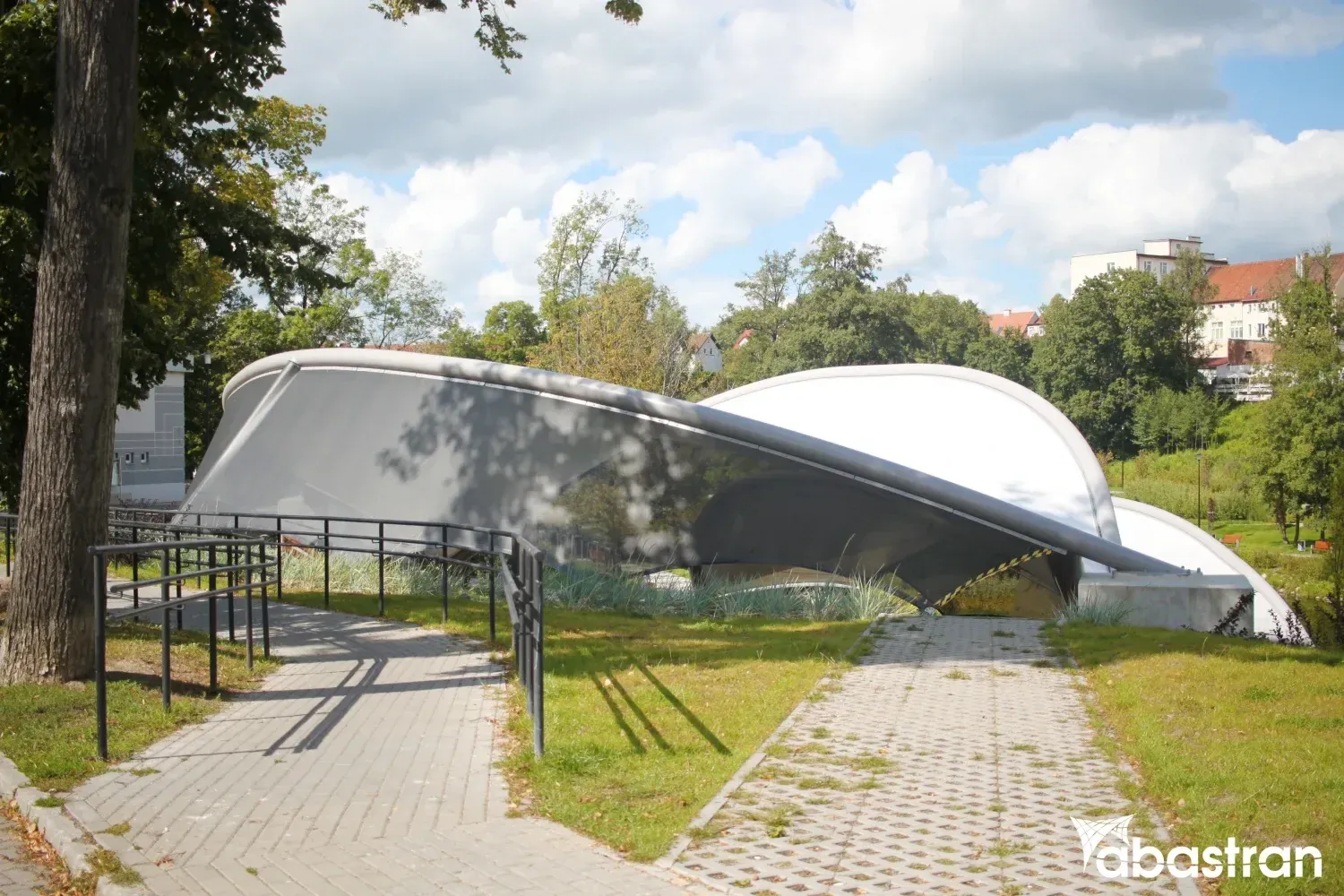
Modern architecture values innovation and function. One of the materials that has revolutionised canopy design is ETFE foil (ethylene tetrafluoroethylene). Although still not universally known, it has gained significant popularity thanks to its unique properties that make it ideal for stage and grandstand canopies.
What is ETFE foil?
ETFE membrane is a thin, transparent foil made from a copolymer of ethylene and tetrafluoroethylene. Originally developed for the aerospace industry, it found its place in construction thanks to a unique combination of light weight, strength and light transmission. Unlike traditional materials like glass or polycarbonate, ETFE is much lighter and more weather-resistant, making it ideal for skylights and façades.
History and development
ETFE technology was first used in construction in the 1980s. The first major projects, like the Eden Project in the UK, demonstrated the material’s potential for impressive innovative structures. Since then ETFE has found use in many prestigious projects worldwide, becoming synonymous with modern sustainable architectural solutions.
Applications in contemporary architecture
ETFE structures are used as skylights over swimming pools, botanical gardens and building façades. The flexibility and ability to create complex shapes have made it a favourite material for architects pursuing functional and visually impressive projects.
Benefits of ETFE membrane
Picking the right material for a canopy is critical from both functional and aesthetic perspectives. ETFE membrane offers many benefits that make it ideal for spaces where natural light matters.
Lightness and strength
One of the main advantages is exceptional light weight. ETFE foil weighs only 1% of comparable glass thickness, which significantly reduces load on the supporting structure. Despite the low weight, ETFE is very strong, resistant to mechanical damage and external forces like wind and snow loads, while still providing thermal insulation.
Transparency and light transmission
ETFE membrane is almost completely transparent, allowing excellent natural daylighting. ETFE also has UV filtering properties, protecting both audience and structure from harmful sun. The combination of light transmission with the option of coloured foils or printed patterns opens unlimited creative possibilities for architects.
Weather resistance
ETFE is exceptionally resistant to weather. It resists UV radiation, preventing degradation under sun. Furthermore, ETFE does not corrode and is resistant to chemicals, making it ideal for outdoor applications even in challenging climate conditions.
Sustainability
In an era of growing environmental awareness, choosing eco-friendly construction materials matters more than ever. ETFE is fully recyclable and its production generates significantly less CO2 than traditional materials like glass. Furthermore, ETFE membrane allows lightweight structures, reducing material and energy consumption during construction.
Operating cost — maintenance economics
Although the initial cost of installing an ETFE membrane can be higher than traditional materials, long-term savings are significant. ETFE requires minimal maintenance, is dirt-resistant and self-cleaning, lowering maintenance costs. Plus, thanks to excellent insulation properties, ETFE membrane can contribute to lower heating and cooling costs.
Project examples
Many impressive examples of ETFE membrane in architectural projects exist worldwide. Abastran is one of the leading designers and contractors of ETFE canopies, delivering many modern projects.
One example is an ETFE roof over a restaurant terrace in Kraków where Abastran was the general contractor. This project used pneumatic ETFE cushions that not only protect from rain but also allow full use of natural light, creating a friendly atmosphere for restaurant guests.
Design and installation process
Designing structures with ETFE membrane is a complex process that requires precision and advanced technology. Years of experience in delivering such projects guarantees the highest quality.
Design phases
The process starts with detailed analysis of project needs and requirements. Architects and engineers then develop a 3D model of the structure, addressing ETFE properties and the specific characteristics of the installation site. The next phase is the technical design, which addresses structural strength and safety.
Installation technology
ETFE installation requires specialist equipment and experience. ETFE membranes can be installed as pneumatic cushions or single layers depending on project requirements. The process includes installing the support system, inflating the cushions, and precisely fitting the membrane to the supporting structure.
Technical guidelines and safety standards
ETFE installation must comply with strict safety standards. Although strong, ETFE requires appropriate structural support for stability and safety. Standards also cover ongoing maintenance and inspection procedures.
Why ETFE is the ideal choice
ETFE membrane is becoming an increasingly popular choice for canopies worldwide. Abastran is one of the leaders in this field, delivering projects that combine function and visual appeal.
Adaptable to many forms
ETFE is exceptionally flexible and can be fitted to almost any shape, allowing unique non-standard structures that stand out from traditional buildings.
Aesthetic and modern appeal
ETFE gives structures a modern, futuristic look that draws attention. Its transparency and the option of various visual effects make it the choice for architects looking to create buildings with unique character.
Long service life
One of ETFE’s most important advantages is durability. The membrane is resistant to mechanical damage, weather and UV radiation, ensuring long service life. As a result, ETFE canopies can serve for decades without major maintenance.
In summary
ETFE membrane is a modern solution gaining recognition in the architectural industry. Thanks to unique properties like lightness, strength, transparency and sustainability, ETFE is becoming an ideal material for canopies and façades.
Built projects show that ETFE not only meets all technical requirements but also enables visually attractive functional structures. Choosing ETFE is an investment in the future that delivers economic and environmental benefits. If you are interested in similar projects, contact us to discuss the details.